

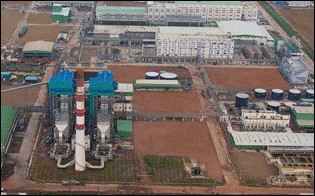
The Production Linked Incentive (PLI) Scheme for Bulk Drugs is strengthening India’s domestic capabilities in manufacturing critical Key Starting Materials (KSMs), Drug Intermediates (DIs) and Active Pharmaceutical Ingredients (APIs), reducing import dependence and enhancing resilience across the pharmaceutical supply chain.
Five Greenfield projects that have commissioned manufacturing facilities under the Scheme demonstrate the growing scale and diversity of domestic production, covering critical ingredients for antibiotics, cardiovascular medicines and Paracetamol.
Lyfius Pharma Pvt. Ltd., a subsidiary of Aurobindo Pharma Limited, has established a large-scale Penicillin G manufacturing facility at Kakinada SEZ in Andhra Pradesh. The project with an investment of ₹2,270.05 crore, has installed capacity of 15,000 MT per annum.
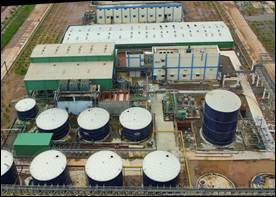
The facility has generated 2,353 direct jobs and recorded cumulative production of ₹1,191 crore. Penicillin G is a critical fermentation-based KSM used in the production of intermediates such as 6-APA, which in turn are used for manufacturing widely prescribed antibiotics including amoxicillin and ampicillin.

With more than 90% domestic value addition, the project resulted in the restoration of domestic manufacturing of Penicillin G after a gap of about three decades and addressed a strategically concentrated vulnerability in India’s antibiotic supply chain while strengthening health security, improving supply-chain resilience and reducing exposure to external supply disruptions and sharp price movements.
Kinvan Private Limited, a DPB Group company, has established a 400 MT per annum fermentation-based manufacturing facility for Clavulanic Acid (Potassium Clavulanate) at Nalagarh, Himachal Pradesh.
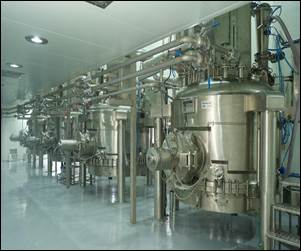
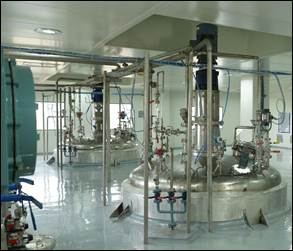
The project with an investment of ₹504.68 crore, has generated 465 direct jobs and recorded cumulative production of ₹413 crore. This is India’s first fermentation-based manufacturing facility for Potassium Clavulanate.
Clavulanic Acid is a β-lactamase inhibitor that is combined with penicillin-group antibiotics such as amoxicillin to improve their effectiveness against resistant bacteria. The project represents a large-scale bio-pharmaceutical investment in a hill State, adding to Himachal Pradesh’s pharmaceutical manufacturing base and has strengthened indigenous capabilities while reducing import dependence..
Andhra Organics Limited (AOL), a wholly owned subsidiary of Virchow Laboratories Limited, has commissioned manufacturing facilities for Sulfadiazine, Telmisartan and Olmesartan at Pydibhimavaram in Srikakulam district of Andhra Pradesh.The projects involve a combined investment of ₹151.47 crore and have generated 221 direct employment. The company has developed the manufacturing technology in-house and has established greenfield production facilities..
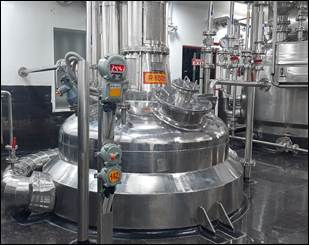
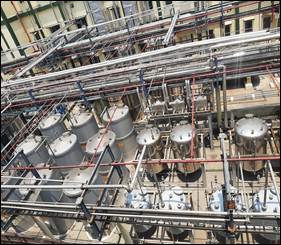
Domestic production of Sulfadiazine has contributed to a substantial reduction in India’s import dependence, with imports having declined by about 73% compared with the FY 2019-20 baseline since the company began supplies in 2022. Telmisartan and Olmesartan are widely used APIs for medicines prescribed for hypertension, supporting the availability of essential cardiovascular medicines.
Meghmani LLP has established a 13,500 MT per annum manufacturing facility for Para Amino Phenol (PAP) at Dahej, Gujarat, with an investment of ₹60.46 crore.
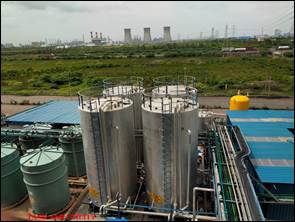
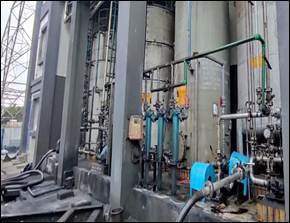
PAP is a critical starting material for Paracetamol, one of the most widely used medicines for fever and pain relief. The PLI-supported facility provides large-scale domestic capacity for PAP, which was earlier largely imported.
The project has recorded cumulative production of ₹687 crore. The facility strengthens backward integration in Paracetamol manufacturing and contributes to greater security of supply for an essential medicine used extensively across the country and has also strengthened India’s position as a reliable global supplier of Paracetamol.
Centrient Pharmaceuticals India Private Limited has established a greenfield Atorvastatin APImanufacturing facility in Nawanshahr, Punjab, with an installed capacity of 206 MT per annum.
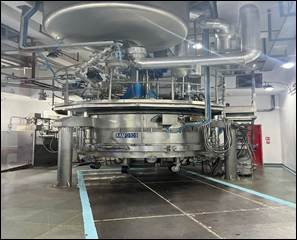
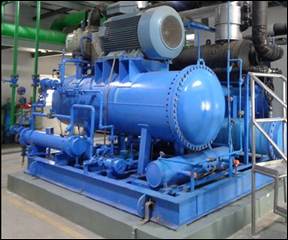
The project with an investment of ₹161.13 crore, has recorded cumulative production of ₹432 crore.
Atorvastatin is a widely prescribed cardiovascular medicine used to lower cholesterol and reduce the risk of cardiovascular events. The project has enabled the development of a supply chain with more than 80% domestic value addition, reducing dependence on imported key starting materials and supporting India’s capacity to meet domestic requirements while strengthening its potential as a global supplier.
The commissioning of these facilities under the PLI Scheme for Bulk Drugs reflects the growing capabilities of Indian manufacturers across fermentation-based and chemically synthesised pharmaceutical inputs.
From Penicillin G and Clavulanic Acid to APIs such as Atorvastatin, Telmisartan and Olmesartan, and the key Paracetamol starting material PAP, the projects are contributing to greater domestic value addition, import substitution, employment generation and supply-chain resilience. The projects also demonstrate how targeted policy support can encourage investments in strategically important pharmaceutical manufacturing segments, strengthen backward integration and build indigenous technological capabilities.