
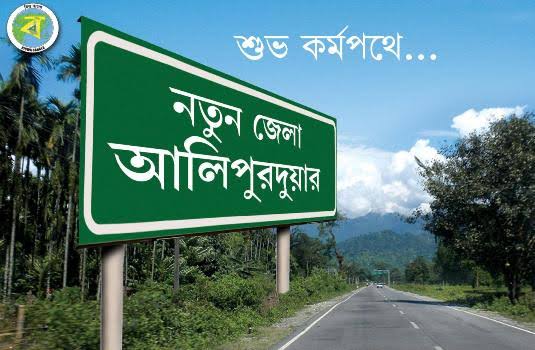
The Minister of State for Tribal Affairs Shri. Durgadas Uikey informed in Lok Sabha on Wednesday that the Government is committed to the socio-economic development of Scheduled Tribes across the country, including Alipurduar district of West Bengal, through various schemes and programmes implemented by the Ministry of Tribal Affairs:
i. Pre-Matric Scholarships to ST students: The scheme is applicable to students who are studying in Classes IX –X. Parental income from all sources should not be more than Rs.2.50 lakhs per annum. Scholarship of Rs.225/-per month for day scholars and Rs.525/-per month for hostellers is given for a period of 10 months in a year. Scholarship is disbursed through the State Government/UT Administration. Funding ratio is 75:25 between Centre and States for all States except North East and Hills States/UT like Himachal Pradesh, Uttarakhand and Jammu and Kashmir where it is 90:10.For UTs without legislature sharing pattern is 100% Central share.
ii. Post Matric Scholarship to ST students: The objective of the scheme is to provide financial assistance to the Scheduled Tribe students studying at post-matriculation or post-secondary levels to enable them to complete their education. Parental income from all sources should not be more than Rs.2.50 lakhs per annum. Compulsory fees charged by educational institutions are reimbursed subject to the limit fixed by the concerned State Fee fixation committee and scholarship amount of Rs.230 to Rs.1200 per month, depending upon the course of study is paid. The Scheme is implemented by the State Governments and Union Territory Administrations. Funding ratio is 75:25 between Centre and States for all States except NE and Hilly States/UT of Himachal Pradesh, Uttarakhand and Jammu and Kashmir where it is 90:10. For UTs without legislature sharing pattern is 100% Central share.
iii. National Fellowship and Scholarship for Higher Education for ST students: This a Central Sector Schemes implemented by the Ministry of Tribal Affairs. The scheme has two sub-Schemes, viz:

a National Scholarship Scheme for Higher Education of ST Students (earlier known as Top Class Scholarship Scheme): Under this Scheme, Scholarship is provided for pursuing Graduate/Post Graduate courses in the selected top-class Government and Non-Government Institutes in professional fields such as Management, Medicine, Engineering, Information Technology, Law etc. All the ST students, with annual parental income is not exceeding Rs.6.0 lakhs and studying in the 265 notified institutes by the Ministry, are eligible to receive scholarship. This scheme is started from year 2007 – 08.
b. National Fellowship Scheme for Higher Education of ST Students: It is a Central Sector Scheme, fully
funded by Ministry of Tribal Affairs to grant scholarship to meritorious ST students for pursuing Ph.D in India after completion of Master degree. This scheme is started from year 2005-06. The total number of fresh fellowships for Ph.D every year will be 750. ST students with a minimum of 55% marks in Master Degree up to the age of 36 years are eligible to apply for fellowship under the Scheme. The value of fellowship is at par with UGC rates.
iv. National Overseas Scholarship for ST students: It is a Central Sector Scheme of Ministry of Tribal Affairs under which scholarships are given to the meritorious Schedule Tribe (ST) students for pursuing higher education in top 1000 ranked (as per latest QS world ranking) Institutes/Universities abroad. This scheme is started from year 1954-55. The Scheme is implemented through the Indian Embassies/Missions abroad, Ministry of External Affairs. Twenty awards are given every year. ST students with annual family income not exceeding Rs.6.0 lakhs are eligible to apply for the Scholarship under the Scheme.
v. Dharti Aaba Janjatiya Gram Utkarsh Abhiyan: Hon’ble PM launched Dharti Aaba Janjatiya Gram Utkarsh Abhiyan Hon’ble PM launched Dharti Aaba Janjatiya Gram Utkarsh Abhiyan (DAJGUA) on 2nd October, 2024. The Abhiyan comprises of 25 interventions implemented by 17-line Ministries and aims to saturate infrastructural gaps in 63,843 villages, provide social infrastructure like hostels, Anganwadi facilities and mobile medical units and set up Van Dhan Vikas Kendras to provide livelihood opportunities benefiting more than 5 crore tribals in 549 districts and 2,911 blocks in 30 States/UTs in 5 years. The Abhiyan has a total budgetary outlay of Rs.79,156 Cr (Central share: ₹56,333 Cr and State share: ₹22,823 Cr). Alipurduar district of West Bengal is covered under the Dharti Aaba Janjatiya Gram Utkarsh Abhiyan (DAJGUA).
vi. Pradhan Mantri Janjati Adivasi Nyaya Maha Abhiyan (PM JANMAN): Government launched Pradhan Mantri Janjati Adivasi Nyaya Maha Abhiyan (PM JANMAN) for socio-economic development of 75 PVTG communities residing in 18 states and one UT. The mission aims to provide basic facilities such as safe housing, clean drinking water and improved access to education, health and nutrition, road and telecom connectivity, electrification of unelectrified households and sustainable livelihood opportunities in 3 years. These objectives are planned to be met through 11 interventions including Hostels and Mobile Medical Units (MMUs) implemented by 9-line Ministries. PM JANMAN has total budgetary outlay of Rs.24,104 Cr (Central share: ₹15336 Cr and State share: ₹8768 Cr). Alipurduar district is also covered under PM JANMAN.
vii. Grants under Article 275(1) of the Constitution: Under the Proviso to Article 275(1) of Constitution, Grants are released to States, having ST population for raising the level of administration in Scheduled Areas and for the welfare of tribal people. This is a Special Area Programme and 100% grants are provided to States. Funds are released to the State Governments depending on the felt needs of ST population to bridge the gap in infrastructure activities in the fields of education, health, skill development, livelihood, drinking water, sanitation, etc.
viii. Grant-in Aid to Voluntary Organizations working for the welfare of Scheduled Tribes: Under the scheme of Grant-in-Aid to Voluntary Organizations working for the welfare of Scheduled Tribes, the Ministry funds projects in the fields of education and health, covering residential schools, non-residential schools, hostels, mobile dispensaries, ten or more bedded hospitals, livelihood, etc.
ix. Eklavya Model Residential Schools (EMRS): The Scheme provides quality residential education to Scheduled Tribe students in remote and tribal areas with the objective of enabling them to access quality education comparable to the best institutions in the country. The schools provide modern educational infrastructure along with facilities for holistic development of tribal students. Ministry of Tribal Affairs is implementing the Central Sector Scheme of EMRS for providing quality education to tribal students, both boys and girls, in their own environment; the EMRSs are to be at par with Navodaya Vidyalayas, with special facilities for preserving local art and culture besides providing training in sports and skill development.
x. Pradhan Mantri Janjatiya Vikas Mission (PMJVM): The Mission promotes sustainable livelihoods of Scheduled Tribes through value addition, entrepreneurship development, marketing support and strengthening of tribal producer organisations, with emphasis on value chains based on Minor Forest Produce and other tribal products.
xi. Van Dhan Vikas Kendra (VDVK): Van Dhan Vikas Kendras are set up under the Minimum Support Price for Minor Forest Produce scheme, implemented through TRIFED, for value addition and livelihood support to Minor Forest Produce gatherers.
xii. Tribal Research, Information, Education, Communication and Events (TRI-ECE): The Scheme supports Tribal Research Institutes for research, documentation, capacity building, preservation and promotion of tribal culture, awareness generation, information dissemination and evidence-based policy support.
xiii. Monitoring, Evaluation, Survey and Social Audit (MESSA): The Scheme supports monitoring, evaluation, impact assessment, surveys and social audit of programmes implemented by the Ministry of Tribal Affairs to strengthen evidence-based planning, policy formulation and effective implementation of tribal development initiatives.
xiv. Venture Capital Fund for Scheduled Tribes (VCF-ST): The Scheme is implemented through the National Scheduled Tribes Finance and Development Corporation (NSTFDC) to provide concessional venture capital assistance to Scheduled Tribe entrepreneurs for establishment and expansion of income-generating enterprises.
xv. National Scheduled Tribes Finance and Development Corporation (NSTFDC): under the Ministry of Tribal Affairs is an apex organisation set up exclusively for economic development of Scheduled Tribes implements various schemes for livelihood generation. NSTFDC extends concessional loans to the eligible Scheduled Tribe communities.
Some of the above schemes may be Centrally Sponsored and other may be Central Sector Schemes.
Beneficiaries covered under education, livelihood, skill development and scholarship schemes etc. are as under:
As on date, 508 EMRSs are functional across the country, including in the State of West Bengal. National Education Society for Tribal Students (NESTS), an autonomous organisation, has been established to manage and implement the Scheme of EMRS in co-ordination with State EMRS Societies. Ministry of Tribal Affairs has sanctioned 9 EMRSs in the State of West Bengal, and all 9 EMRSs are functional. No EMRS is presently located in Alipurduar district; the existing EMRSs in West Bengal are located in Bankura, Birbhum, Dakshin Dinajpur, Jalpaiguri, Jhargram, Kalimpong, Paschim Bardhaman and Purulia (2 schools) districts. The district-wise details of EMRSs in West Bengal are as under:
| S.No. | District | Block/ Taluka | Total Enrolment 2025-26 |
| 1 | Bankura | Khatra | 430 |
| 2 | Birbhum | Bolpur Sriniketan | 385 |
| 3 | Dakshin Dinajpur | Bansihari | 441 |
| 4 | Jalpaiguri | Nagrakata | 479 |
| 5 | Jhargram | Jhargram | 464 |
| 6 | Kalimpong | Kalimpong | 125 |
| 7 | Paschim Bardhaman | Kanksa | 414 |
| 8 | Purulia | Bundwan | – |
| 9 | Purulia | Manbazar – II | 414 |
In the State of West Bengal, a total of 32 VDVKs have been sanctioned, covering 8,505 beneficiaries (8,227 under PMJVM and 278 under PM-JANMAN). In Alipurduar district specifically, 7 (seven) VDVKs have been sanctioned, covering 1,134 beneficiaries, with a total sanctioned fund of Rs. 55.05 lakh, of which Rs. 50.025 lakh has been released to the State Implementing Agency (SIA).
The Ministry of Tribal Affairs implements five scholarship schemes for Scheduled Tribe (ST) students to promote access to secondary, higher and professional education across the country, including Alipurduar district of West Bengal. These include the Pre-Matric Scholarship, Post-Matric Scholarship, National Scholarship for Higher Education (Top Class), National Fellowship for Higher Education (NFST) and National Overseas Scholarship (NOS). During the last three financial years, beneficiaries from Alipurduar district under these schemes were as follows:
| Scholarship Scheme | 2023-24 | 2024-25 | 2025-26 |
| Pre-Matric Scholarship for ST Students | 2,315 | 668 | 277 |
| Post-Matric Scholarship for ST Students | 6,517 | 2,925 | 1,754 |
| National Scholarship for Higher Education (Top Class) | 13 | 18 | 19 |
| National Fellowship for Higher Education (NFST) | 4 | 3 | 4 |
| National Overseas Scholarship (NOS) | Nil | Nil | Nil |
Ministry of Tribal Affairs through the State Governments/ UT Administration/departments has undertaken habitation level data collection exercise through PM Gati Shakti mobile application to estimate PVTG population figures and infrastructure gaps in order to cover PVTG population residing in villages & habitations covered under PM JANMAN. Based on the data captured, PVTG population in State of West Bengal is tabulated as under:
| Name of State | PVTG HHs | PVTG Population |
| West Bengal | 19991 | 68720 |
The actual number beneficiaries to be covered under the abhiyan is subjected to eligibility criteria of specific guidelines of concerned interventions as per norms approved. The details of the benefits given under PM JANMAN, in the District of Alipurduar, West Bengal as on 30.06.2026, Ministry-wise is as under:
| Name of State | West Bengal | |
| Name of District | Alipurduar | |
| MoJS | Sanctioned villages | 1 |
| Saturated villages | 0 | |
| MoHFW | MMUs sanctioned and Operational | 2 |
| MoP | HHs Sanctioned | 11 |
| HHs Electrified | 11 | |
| MoTA (VDVKs) | Sanctioned | 4 |
The Government continues to undertake the socio-economic development of Scheduled Tribe communities in Alipurduar district through various ongoing Central Sector and Centrally Sponsored Schemes, including DAJGUA and PM JANMAN. Developmental interventions under these programmes are implemented on a need-based and convergence approach. Accordingly, the district continues to receive benefits under these initiatives.
