

Table of Contents
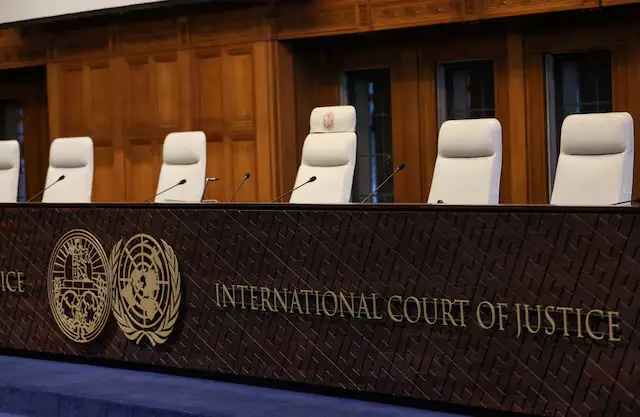
THE HAGUE, November 17 – The International Court of Justice, or World Court, will issue its decision on Thursday in a case in which Gambia has accused Myanmar of genocide against its Rohingya Muslim minority. Here are some facts about the court.
WHEN WAS THE COURT SET UP AND WHY?
The ICJ is the United Nations’ highest court for disputes between states, not to be confused with the International Criminal Court, which handles war crimes cases against individuals. It was established under the 1945 UN Charter to give countries a permanent court where they could seek advice and resolve legal disputes through international law rather than force. It held its first sitting on April 18, 1946.
WHO CAN BRING A CASE AT THE ICJ?
All 193 members of the United Nations can bring cases, but only 75 have filed a separate declaration giving the court jurisdiction that enables it to immediately open a case when a dispute arises.
The court also has jurisdiction over disputes between states about the application of over 300 international treaties, including the 1948 Genocide Convention.

UN bodies such as the General Assembly can ask the court for so-called advisory opinions on questions of international law. These opinions are non-binding but often carry a lot of weight in proceedings in national courts.
WHO DECIDES CASES AT THE ICJ?
The ICJ, based at the Peace Palace in The Hague, is made up of 15 judges elected to nine-year terms. Rulings are binding on UN member states and cannot be appealed, however the court has very limited options to enforce its rulings other than its moral authority and they are sometimes ignored.
WHAT KIND OF CASES COME TO THE ICJ?
The court has delivered judgments on disputes ranging from land frontiers and maritime boundaries to hostage-taking and genocide.
The court has increasingly taken on cases involving allegations of state violations of human rights. One third of the cases on the court’s docket now deal with allegations of human rights violations.
It made headlines in 2023 when South Africa brought a case against Israel, accusing it of committing genocide against Palestinians in Gaza. While the court issued some emergency measures, main arguments are not expected until late 2029. Israel opposes the case and says it respects international law.
On the war in Ukraine, the ICJ was early in responding to Russia’s full-scale invasion of February 2022, ordering Moscow the following month to “immediately suspend the military operations”. There has been no final ruling in that case either.