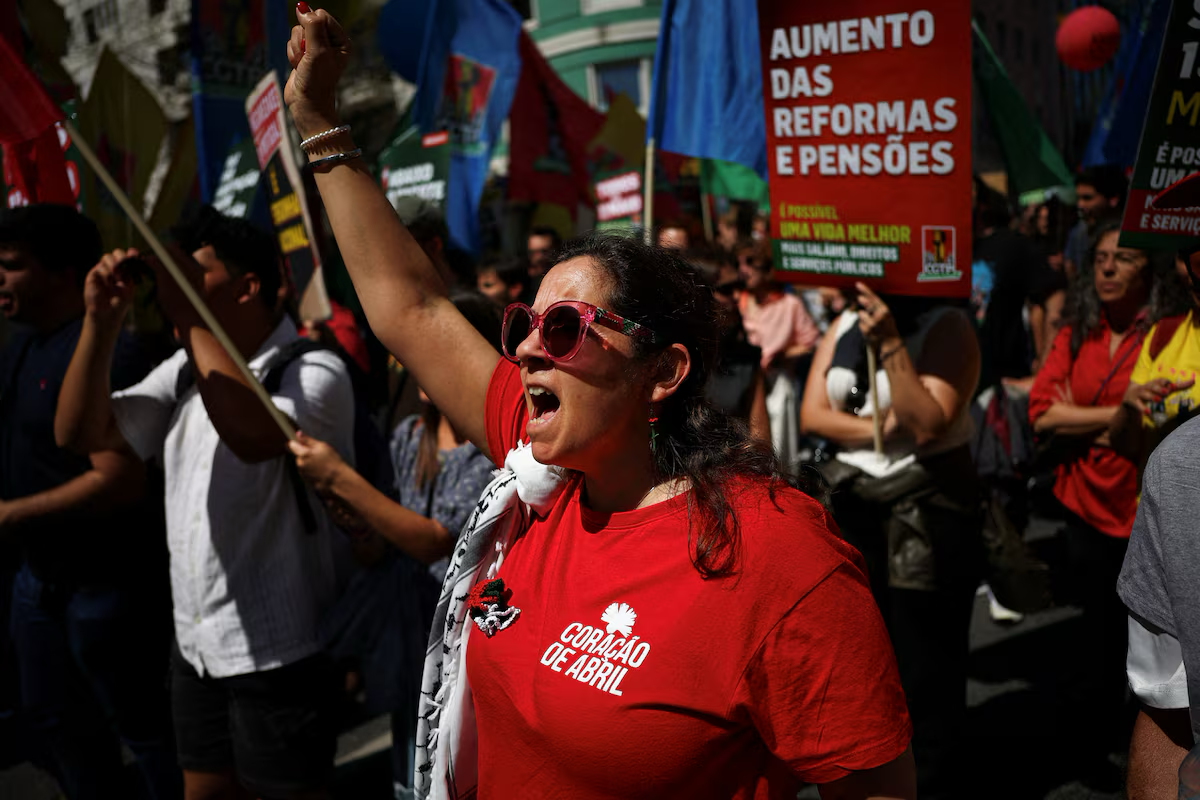
A woman reacts as protestors participate in a demonstration organised by Portugal’s largest labour union confederation CGTP, against the labour reform the government wants to implement, while calling for better wages and working conditions, in Lisbon, Portugal, April 17, 2026. REUTERS
LISBON, June 3 (Reuters) – A second general strike in six months disrupted services across Portugal on Wednesday, halting trains, cancelling hundreds of flights and closing schools, as unions protested against the government’s labour reform plans.
Portugal’s minority centre-right government is likely to pass a bill with support from the far‑right Chega party proposing changes to over 100 articles of the labour code that aim to boost productivity and spur growth after talks with unions collapsed.
Tiago Oliveira, head of Portugal’s largest umbrella union CGTP, which called the general strike, told Reuters the reform would worsen workers’ conditions by entrenching precarious employment, deregulating working hours, easing dismissals and curbing strike rights and parental protections.
The reform would leave young workers “stuck on precarious contracts for life,” forcing them to work 50 hours a week without extra pay instead of the current standard 40 hours, while making it easier to dismiss and replace them with cheaper outsourced labour, said Rodrigo Azevedo, a 30‑year‑old bank employee.
“The labor package is a major threat not just to the future of young workers, but to our present,” he said.
State‑owned railway CP suspended long‑distance trains and most regional trains, while Lisbon’s metro shut.
Schools closed nationwide due to staff shortages, and hospitals postponed most surgeries and appointments following a nursing walkout.
Portugal’s flag carrier TAP said it will operate just 79 of its usual 300-plus daily flights on Wednesday, while Iberia expects reductions of between 50% and 75%.
The reform envisions making just-cause dismissals easier, allowing companies to deny workers reinstatement in cases of illegal dismissal provided they pay compensation, and lifting limits on outsourcing.
An earlier strike in December was the first general shutdown since protests against austerity in 2013.
Reporting by Sergio Goncalves and Miguel Pereira; editing by Charlie Devereux and Sharon Singleton