

Union Minister of Culture and Tourism, Shri Gajendra Singh Shekhawat, to participate in the inaugural ceremony at Tawang on 31 October 2026
Sacred Piprahwa Relics from the National Museum, New Delhi, to be taken to Tawang, Bomdila and Namsai, reflecting Arunachal Pradesh’s rich Buddhist traditions
Special Indian Air Force aircraft and helicopter arrangements planned for the safe and dignified transportation of the Holy Relics
Exhibition on the discovery and repatriation of the Piprahwa heritage to accompany the exposition at all three locations
International conference on “Buddhism: Dissemination in the Himalayan Region and Beyond” to bring together monks, scholars and delegates from India and six other countries
The Ministry of Culture, Government of India, in collaboration with the Government of Arunachal Pradesh, the International Buddhist Confederation (IBC) and the National Museum, New Delhi, is organising an exposition of the Holy Relics of Shakyamuni Buddha in Arunachal Pradesh from 31 October to 21 November 2026. The exposition will cover three important centres of Buddhist faith and heritage—Tawang, Bomdila and Namsai, providing devotees and members of the public an opportunity to pay homage to the Sacred Relics.
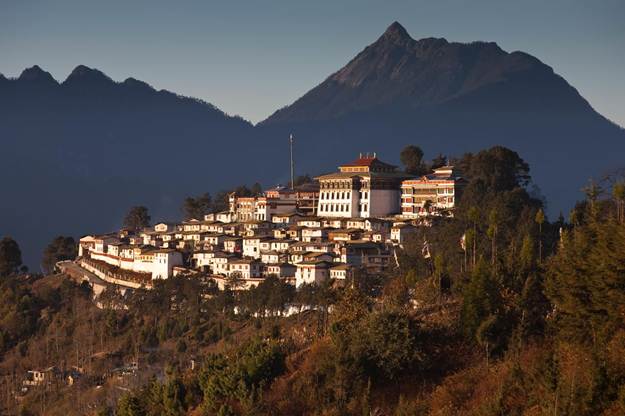
Union Minister of Culture and Tourism, Shri Gajendra Singh Shekhawat, is scheduled to participate in the inaugural ceremony at the historic Gaden Namgyal Lhatse (Tawang Monastery) on 31 October 2026. The programme will be attended by distinguished representatives of the Government of Arunachal Pradesh, venerable members of the Buddhist Sangha, representatives of Buddhist institutions, devotees and other dignitaries.
The exposition is being organised in recognition of the deep spiritual significance of the Holy Relics and Arunachal Pradesh’s distinctive place in India’s Buddhist cultural landscape. It also reflects the Government of India’s continuing commitment to the protection, preservation and dissemination of the country’s Buddhist heritage, and to strengthening cultural and spiritual connections with Buddhist communities in India and abroad.
Tawang Monastery

Ceremonial Movement and Inauguration at Tawang
The Holy Relics, presently preserved at the National Museum, New Delhi, will commence their sacred journey with ceremonial observances at the Museum on the night of 30 October 2026. They will thereafter be taken to Air Force Station Palam for onward transportation to Arunachal Pradesh.
As per the proposed movement itinerary, the Holy Relics are scheduled to depart from Palam in the early hours of 31 October 2026 by a special Indian Air Force aircraft and reach Air Force Station Borjhar, Guwahati, before being transported by helicopter to Tawang.
Upon arrival, the Holy Relics will be received with due religious ceremony and reverence. They will thereafter be taken to Tawang Monastery for installation and the inaugural ceremony, scheduled between 10:00 AM and 11:30 AM on 31 October 2026.
A further inaugural function, together with the opening of the associated exposition and exhibition, is scheduled for 1 November 2026, with the Chief Minister of Arunachal Pradesh, Shri Pema Khandu, as the Chief Guest.
The occasion coincides with the observance of Lhabab Düchen, a significant festival in the Tibetan Buddhist tradition commemorating the Buddha’s descent from the heavenly realm. The exposition will thus bring together religious observance, cultural heritage and public participation in a spiritually meaningful setting.
The movement and installation of the Holy Relics are being planned with particular attention to their sanctity, security and conservation requirements. The Ministry of Culture is coordinating with the Ministry of Defence, Indian Air Force, Government of Arunachal Pradesh, National Museum and other concerned agencies for the necessary operational arrangements.
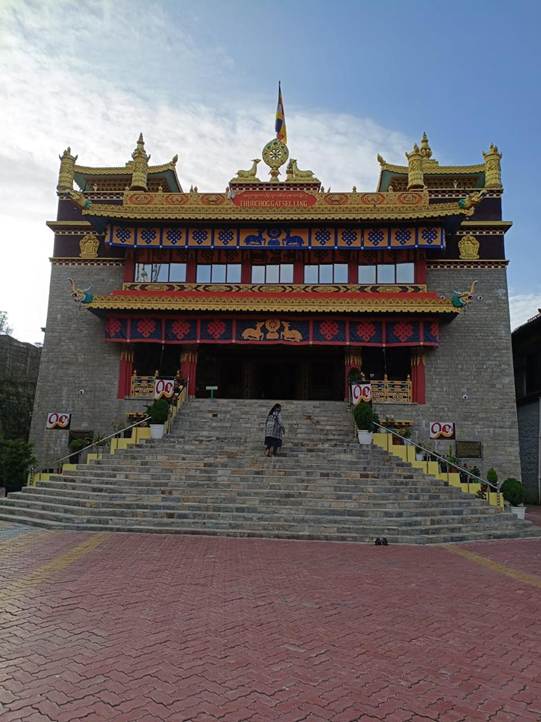
Bomdila Monastery
Exposition Schedule: Tawang, Bomdila and Namsai
The Holy Relics will be available for public darshan at the following locations:
| Dates | Venue | Programme |
| 31 October 2026 | Gaden Namgyal Lhatse, Tawang Monastery | Arrival, ceremonial reception and inaugural ceremony |
| 1–7 November 2026 | Tawang Monastery | Public darshan and exposition |
| 8–13 November 2026 | TGL Monastery (Lower Gompa), Bomdila | Public darshan and exposition |
| 14–20 November 2026 | Golden Pagoda, Namsai | Public darshan and exposition |
| 21 November 2026 | Namsai–Tezu–New Delhi | Ceremonial departure and return of the Holy Relics to the National Museum |
On 8 November, the Holy Relics are scheduled to travel from Tawang to Rupa by helicopter and thereafter by road to Bomdila. The itinerary includes ceremonial reception at Upper Gompa before their installation at Lower Gompa, where the inaugural ceremony is scheduled between 3:00 PM and 4:00 PM.
On 14 November, the Holy Relics will be transported from Bomdila to Rupa by road and thereafter by helicopter to Nalung Helipad, Namsai. They will be taken to the Golden Pagoda, where the installation and inaugural ceremony are scheduled between 11:00 AM and 12:00 noon.
Following the conclusion of public darshan at Namsai, the Holy Relics are scheduled to return to the National Museum, New Delhi, on 21 November 2026, via Tezu Airport and Air Force Station Palam.
The timings and movement arrangements will remain subject to operational, weather and security considerations.
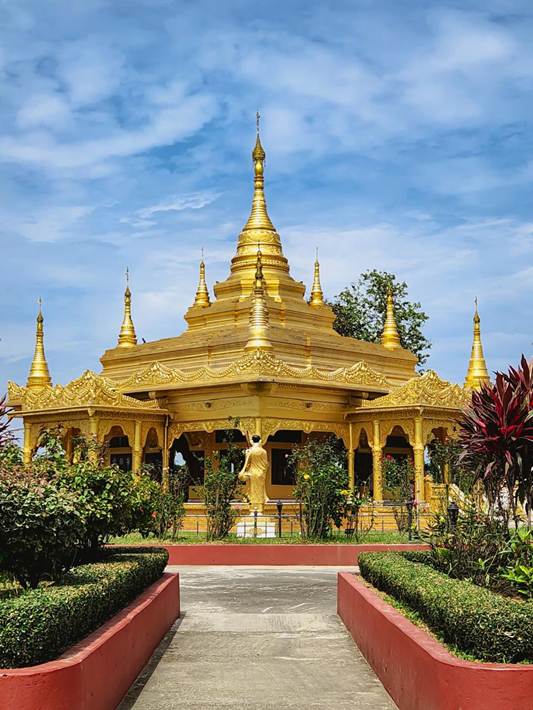
Namsai Pagoda
Sacred Piprahwa Relics: An Extraordinary Archaeological and Spiritual Heritage
The Holy Relics being taken to Arunachal Pradesh originate from Piprahwa in present-day Siddharthnagar district, Uttar Pradesh, an archaeological site associated with ancient Kapilavastu and the Shakya tradition of Lord Buddha.
Piprahwa occupies a prominent place in the archaeological history of Buddhism. In 1898, William Claxton Peppé excavated a stupa at the site and discovered reliquaries containing bone fragments and precious objects, bringing international attention to the historical and religious significance of the discovery.
Subsequently, the Archaeological Survey of India conducted further excavations between 1971 and 1977, under the supervision of archaeologist Shri K. M. Srivastava. Excavations at deeper levels revealed two additional reliquary caskets containing ancient bone relics traditionally associated with Lord Buddha.
The larger casket contained 12 sacred bone fragments, while the smaller casket contained 10, making a total of 22 sacred relics recovered during these excavations. Of these, 20 are preserved at the National Museum, New Delhi, and two at the Indian Museum, Kolkata.
The relics, comprising ancient osteological material, are regarded as exceptionally rare and are accorded profound religious reverence by Buddhist communities. Their historical and archaeological importance is accompanied by a deep spiritual significance rooted in the long-established Buddhist tradition of relic veneration.
Following the Mahāparinirvāṇa of Lord Buddha at Kushinagar, the tradition of enshrining His corporeal relics in stupas developed into an important expression of Buddhist devotion. Over the centuries, these sacred sites became centres of pilgrimage, religious learning and cultural exchange.
The present exposition offers devotees an opportunity to connect with this ancient spiritual tradition while also drawing attention to the importance of preserving archaeological and religious heritage for future generations.
Arunachal Pradesh: A Meeting Place of Buddhist Traditions
Arunachal Pradesh occupies a distinctive position in the Buddhist cultural geography of India. Its monasteries, religious institutions and living traditions reflect historical connections with the wider Himalayan region and other parts of Buddhist Asia.
The western and northern parts of the State, including Tawang and West Kameng, are particularly associated with the Mahāyāna and Vajrayāna traditions of Himalayan Buddhism.
Tawang Monastery, also known as Gaden Namgyal Lhatse, is an important centre of monastic learning, religious practice and cultural continuity. The monasteries of Bomdila similarly sustain the spiritual and artistic traditions of the region.
In eastern Arunachal Pradesh, particularly Namsai and adjoining areas, the Theravāda traditions followed by the Tai Khamti and other Buddhist communities represent another important dimension of India’s diverse Buddhist heritage.
The exposition across Tawang, Bomdila and Namsai will therefore bring the Holy Relics to communities representing different Buddhist traditions, reflecting the diversity and shared spiritual foundations of Buddhism within the State.
Beyond its religious significance, the initiative is expected to strengthen awareness of Arunachal Pradesh’s Buddhist heritage, encourage cultural exchange and promote the universal values of peace, compassion, non-violence and harmony associated with the teachings of Lord Buddha.
Government of India’s Continuing Commitment to Buddhist Heritage
Under the leadership of Hon’ble Prime Minister Shri Narendra Modi, the Government of India has undertaken initiatives for the conservation, protection, promotion and international dissemination of India’s Buddhist heritage.
These efforts include the preservation of Buddhist monuments and sacred objects, development of pilgrimage infrastructure, support for Buddhist scholarship and cultural exchanges, recovery of important heritage objects and organisation of international expositions of Sacred Relics.
The Government’s approach recognises the importance of safeguarding India’s civilisational inheritance while strengthening the cultural and spiritual relationships that connect India with Buddhist communities across the world.
A significant recent development was the return to India in 2025 of the Piprahwa jewel collection, associated with the historic 1898 discovery. Following the proposed international auction of the collection, the Ministry of Culture undertook efforts that contributed to its return after approximately 127 years.
The homecoming of these precious objects marked an important development in the preservation and recovery of India’s cultural heritage and renewed public interest in the history of Piprahwa and the early Buddhist tradition.
The Government of India’s initiatives also reflect the broader principle of “Vikas Bhi, Virasat Bhi”, emphasising the complementary importance of development and preservation of heritage.
International Expositions: Strengthening India’s Buddhist Cultural Connections
India has a longstanding tradition of sharing its sacred Buddhist heritage through international relic expositions, enabling devotees abroad to participate in public veneration and reinforcing historical bonds of friendship.
Over the decades, Government of India-supported expositions have taken place in countries including Sri Lanka, Mongolia, Singapore, the Republic of Korea and Thailand.
In recent years, such initiatives have continued to strengthen cultural diplomacy and people-to-people relations.
In 2022, the exposition of the Holy Relics of Lord Buddha in Mongolia reaffirmed the longstanding Buddhist connections between India and Mongolia.
In 2024, the Holy Relics of Lord Buddha, together with the relics of His two principal disciples, Arahant Sariputta and Arahant Mahamoggallana, were taken to Thailand for public veneration at Bangkok, Chiang Mai, Ubon Ratchathani and Krabi. The exposition witnessed participation by millions of devotees.
In 2025, the Holy Relics of Lord Buddha were taken to Vietnam during the Vesak celebrations, attracting widespread public participation. Expositions were also undertaken in Kalmykia, Russia, and Bhutan, further strengthening India’s spiritual and cultural ties with Buddhist communities in these regions.
In February 2026, the sacred Devnimori Relics were taken to Sri Lanka for public veneration, reflecting the enduring Buddhist relationship between the two countries.
In May 2026, the exposition of the Holy Relics of Lord Buddha in Ladakh provided devotees and monastic communities of the Himalayan region an important opportunity for collective prayer and reverence.
Subsequently, during May–June 2026, the Holy Relics of Arahant Sariputta and Arahant Mahamoggallana from Sanchi were taken to Mongolia for a special exposition at the Gandan Tegchenling Monastery in Ulaanbaatar.
These initiatives demonstrate India’s commitment to sharing its Buddhist heritage in a spirit of mutual respect, cultural understanding and spiritual fellowship.
The exposition in Arunachal Pradesh represents another important step in this continuing engagement, bringing the sacred heritage preserved at the National Museum closer to Buddhist communities in India’s northeastern Himalayan region.
Special Exhibition: “Unearthing the Sacred Piprahwa”
As an important accompanying initiative, the International Buddhist Confederation will organise an exhibition titled “Unearthing the Sacred Piprahwa: The Story of the Holy Buddha Relics and Their Discovery” at Tawang, Bomdila and Namsai.
The exhibition will present the historical and spiritual significance of Buddhist relic veneration, beginning with the life and teachings of Siddhartha Gautama and the development of the tradition of enshrining Sacred Relics following His Mahāparinirvāṇa.
It will trace the archaeological discoveries at Piprahwa, including the excavation undertaken by William Claxton Peppé in 1898 and the subsequent investigations by the Archaeological Survey of India.
The exhibition will also examine the historical journey of the Piprahwa jewels, their association with the Peppé family collection, the proposed international auction in 2025 and the subsequent efforts that led to their return to India.
Through this narrative, visitors will gain an understanding of the relationship between archaeological research, religious traditions, heritage preservation and the recovery of culturally significant objects.
The exhibition is expected to serve as an important educational and cultural component of the exposition, particularly for students, scholars, young visitors and members of the public interested in India’s Buddhist history.
International Conference on “Buddhism: Dissemination in the Himalayan Region and Beyond”
The International Buddhist Confederation, in collaboration with the Government of Arunachal Pradesh, will also organise an international conference titled “Buddhism: Dissemination in the Himalayan Region and Beyond” at the Kalawangpo Convention Hall, Tawang, on 2 November 2026.
The conference is expected to bring together venerable monks, Buddhist scholars and delegates from India, Nepal, Sri Lanka, Myanmar, Malaysia, Indonesia and Germany.
It will provide a platform for scholarly dialogue on the historical transmission of Buddhist teachings, the evolution of monastic institutions, the preservation of Buddhist knowledge traditions and the contemporary relevance of Buddhist philosophy and ethical principles.
The deliberations will be organised around three broad themes:
1. Carrying Forward the Buddha’s Legacy after Mahāparinirvāṇa
This theme will examine the continuity of Buddhist teachings and practices following the Mahāparinirvāṇa of Lord Buddha. Discussions will cover the Four Noble Truths as a living heritage, conservation and material culture, the evolution of religious institutions, international engagement through Sacred Relic expositions and Buddhism’s contribution to shared cultural traditions.
2. Historical and Doctrinal Continuity of Buddhism
This theme will focus on the intergenerational transmission of Buddhist textual and monastic lineages, with particular reference to Arunachal Pradesh. It will also explore the plurality of Buddhist schools, shared doctrinal foundations, language and interpretation, pedagogical traditions, and the preservation of Buddhist ideas through art and cultural expression.
3. Buddhism and Right Livelihood
The third theme will explore the contemporary relevance of Buddhist ethical teachings, including connections between the intellectual traditions of Nalanda and modern academia, cultural tourism and pilgrimage, skill development, sustainable livelihoods, and the relationship between Buddhism, globalisation and consumerism.
The conference will highlight Arunachal Pradesh’s importance as a living centre of Buddhist heritage, where diverse traditions have been sustained through monastic institutions, community practices and cultural exchange.
It will also provide an opportunity to examine how Buddhist thought and ethical principles can contribute to contemporary discussions on education, sustainability, cultural preservation and peaceful coexistence.
Institutional Coordination and Public Facilitation
The exposition is being undertaken through coordinated efforts of the Ministry of Culture, Government of Arunachal Pradesh, National Museum, International Buddhist Confederation and other concerned institutions.
The National Museum, New Delhi, as the nodal agency, is responsible for the technical and conservation aspects of the Holy Relics, including their secure handling, transportation, installation and safe return.
The Government of Arunachal Pradesh is coordinating arrangements at the respective venues, including security, reception, infrastructure, crowd management, medical facilities, sanitation, local transportation and public facilitation.
The International Buddhist Confederation is facilitating religious coordination, participation of venerable monks, associated cultural and scholarly programmes, the Piprahwa exhibition and the international conference.
The Ministry of Defence and the Indian Air Force have been approached for the requisite aircraft and helicopter support for movement of the Holy Relics, taking into account the challenging terrain and operational requirements of Arunachal Pradesh.
Media coverage and public outreach are being coordinated with the concerned agencies to disseminate information regarding the exposition and associated programmes.
The arrangements are intended to ensure that public veneration is conducted in an orderly, secure and dignified manner, while maintaining the highest standards of religious sanctity and conservation.
A Shared Message of Peace, Compassion and Harmony
The exposition of the Holy Relics of Lord Buddha in Arunachal Pradesh represents an important occasion for spiritual reflection, cultural participation and the celebration of India’s Buddhist heritage.
By bringing the Sacred Relics to Tawang, Bomdila and Namsai, the initiative will provide devotees from different Buddhist traditions an opportunity to participate in public veneration and reaffirm their shared spiritual inheritance.
The accompanying exhibition and international conference will further enrich the occasion by connecting religious devotion with historical understanding, scholarship and cultural exchange.
The exposition also carries a message of wider significance. The teachings of Lord Buddha—compassion, non-violence, wisdom, moderation and peaceful coexistence continue to offer valuable guidance to humanity in an increasingly interconnected world.
Through the preservation of sacred heritage and its responsible dissemination, the Government of India seeks to strengthen cultural understanding, encourage people-to-people connections and promote the enduring message of peace and harmony associated with Bhagwan Buddha.
The exposition will conclude on 21 November 2026 with the ceremonial return of the Holy Relics to the National Museum, New Delhi.