

“When a Skill Opens Another Path”
In villages where a family’s future depends largely on harvests, acquiring a skill can often open up alternate livelihood pathways. For many rural youth, that path begins with an opportunity to learn, work, and build new sources of earning. That is where the Deen Dayal Upadhyaya Grameen Kaushalya Yojana (DDU-GKY) enters the story. Launched on 25 September 2014 under the National Rural Livelihoods Mission (DAY-NRLM), DDU-GKY focuses on youth from marginalized and vulnerable rural households. It provides placement-linked skill training aimed at sustainable livelihoods. The programme targets youth aged 15 to 35 years, linking skill training with employment opportunities.
The programme is also changing with the world of work. The revised DDU-GKY 2.0 framework places greater emphasis on industry-led training, sustainable employment, post-placement support, upskilling and reskilling. An end-to-end digital system now covers training, assessment, certification, monitoring and employment tracking. It also strengthens employer engagement through partnerships, job fairs, campus placements and industry consultations.
The focus is clear: training should lead to work, and work should have a better chance of lasting. As of June 2026, 18.45 lakh rural youth have been trained under DDU-GKY, while 12.35 lakh have been placed.
Behind these numbers are stories of individuals whose lives changed when learning opened pathways to employment and livelihoods.

Keeping the Dream Alive
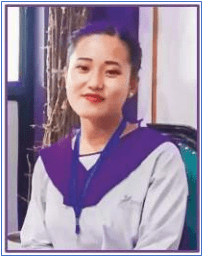
For years, Vimethano Sakhrie from Nagaland witnessed her mother work tirelessly to support a family of ten. After completing high school, Vimethano aspired to pursue higher education, but financial constraints made it difficult to realise that ambition.
Everything changed when she learnt about DDU-GKY. Refusing to give up on her dreams, she enrolled in a DDU-GKY tourism and hospitality training programme. Months later, Vimethano walked into her first job at The Den Bengaluru in Food & Beverage Service. It was more than employment. It marked the beginning of a new chapter for her and her family.
Looking back on her journey, Vimethano says, “I extend my gratitude to the Ministry of Rural Development and NSRLM, Government of Nagaland for implementing DDU-GKY, which has helped many unemployed youths across India. This opportunity was a blessing for me, and I hope many more youths can benefit from it, just like I did.”
For Vimethano, DDU-GKY turned an interrupted education into a launchpad for a career. For Chandan Shah, the opportunity eventually led much further from home.
From Odd Jobs to a Career Abroad
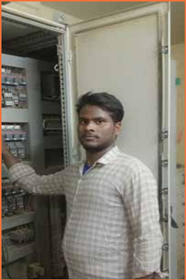
There was a time when even basic necessities were difficult for Chandan Shah’s family. Living in Tetahli village of Siwan, Bihar, he had little hope of continuing his education. He left school after high school to help his father in the fields. With few opportunities around him, Chandan took up odd jobs to earn a living. Yet, the work barely offered enough for a decent life.
A new possibility emerged through his mother, who was part of the Genda JEEViKA Self Help Group. She encouraged him to explore DDU-GKY. Chandan underwent counselling and chose to train as an Assistant Electrician. The training equipped him with the skills needed to take his first step towards a career. Upon completing the course, he secured his first job in Baddi as a helper at a distillery, earning ₹10,500 per month. This early experience provided him with a foundation for further professional growth. Building on these skills and experience, Chandan later pursued an opportunity overseas and moved to Dubai, where he joined Al Shafa General Contracting as an electrician.
By then, his monthly earnings had increased to ₹35,000. The impact extended beyond his own career, bringing greater financial security to his family. Chandan was able to support his family and contribute towards his siblings’ education in private schools. His journey also made him a source of inspiration for young people in his village.
Chandan’s story illustrates how a first employment opportunity can become a foundation for sustained livelihood progression. DDU-GKY equipped him with the skills to take that first step, while his determination and experience enabled him to pursue further opportunities. Together, they helped him build a more secure future for himself and his family.
Yet, not every DDU-GKY journey leads away from home. For Rupali Hasda, the opportunity eventually brought her back.
Turning a Job into an Enterprise
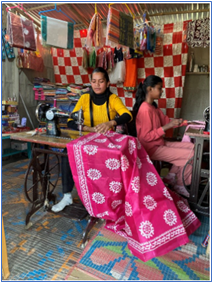
Financial hardship had forced Rupali Hasda of Charaideo, Assam, to leave school after Class 9. Her family depended on agriculture, with her father as the sole earner. Her mother, an active member of a Self-Help Group, continued to encourage her dreams. Rupali learnt about DDU-GKY through a Jeevika Sakhi and enrolled in the Sewing Machine Operator trade in December 2022.
After completing her training, she secured a job at KPR Apparels Mills in Tiruppur, Tamil Nadu. For five months, she worked in an unfamiliar city and adapted to a new environment. Yet, her thoughts remained close to home. She returned to Hatibandha with savings from her job and invested Rs.50,000 in a Sewing and Cutting Centre. What began as a livelihood for herself soon created an opportunity for someone else. She employed a young girl at the centre and began building an enterprise within her community. With an annual income of around Rs.1.10 lakh, Rupali’s journey shows another side of skilling. A job gave her a start, but she chose to turn that experience into something of her own.
Rupali chose to build her livelihood close to home. Hiralal, however, sought a different path-one that would enable him to build a career while navigating the challenges before him.
A Career of His Own
Hiralal Pandit from Jharkhand had grown up watching every harvest decide how far his family’s money would stretch. His family of four depended on his father’s seasonal farming, which earned around Rs.5,000 a month.
After completing Class 10, he began helping his father in whatever ways he could. As a differently abled young man, finding work was far from easy. but Hiralal refused to let his circumstances define his future.
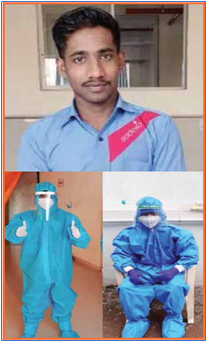
He aspired to build a career of his own while contributing to the financial well-being of his family. While exploring his options, Hiralal came to know about DDU-GKY. The programme’s free training and placement support offered him an opportunity to acquire skills and pursue employment. He enrolled in the Healthcare Multipurpose trade at a training centre in Dumka, Jharkhand.
The training marked a significant turning point in Hiralal’s journey. He acquired new skills in a supportive and inclusive learning environment where he was treated with dignity and equality. After completing the course, he secured placement at SMBT Hospital in Nashik as a General Duty Assistant. The opportunity enabled him to earn independently while contributing to his family’s well-being. More importantly, the experience strengthened his confidence and broadened his sense of what he could achieve.
Today, Hiralal encourages other young people to look beyond their circumstances and make the most of the opportunities available to them. For him, the journey began with the courage to take the first step. DDU-GKY helped him turn that first step into a pathway towards a career and a more secure future.
When a Skill Becomes a Livelihood
A skill cannot remove every hardship faced by a rural household, but it can open doors to greater possibilities. For Vimethano, it provided a route to employment when financial constraints interrupted her educations. For Chandan, it marked the beginning of a career that eventually took him to Dubai. Rupali brought her skills and experience back home to build an enterprise of her own, while Hiralal found an avenue to employment and an opportunity to support his family.
Their journeys took different directions, but they share a common thread: the chance to acquire skills, apply them, and build a livelihood. DDU-GKY seeks to make that first step possible, helping rural youth move from training to employment and from employment towards more secure and sustainable livelihoods.