
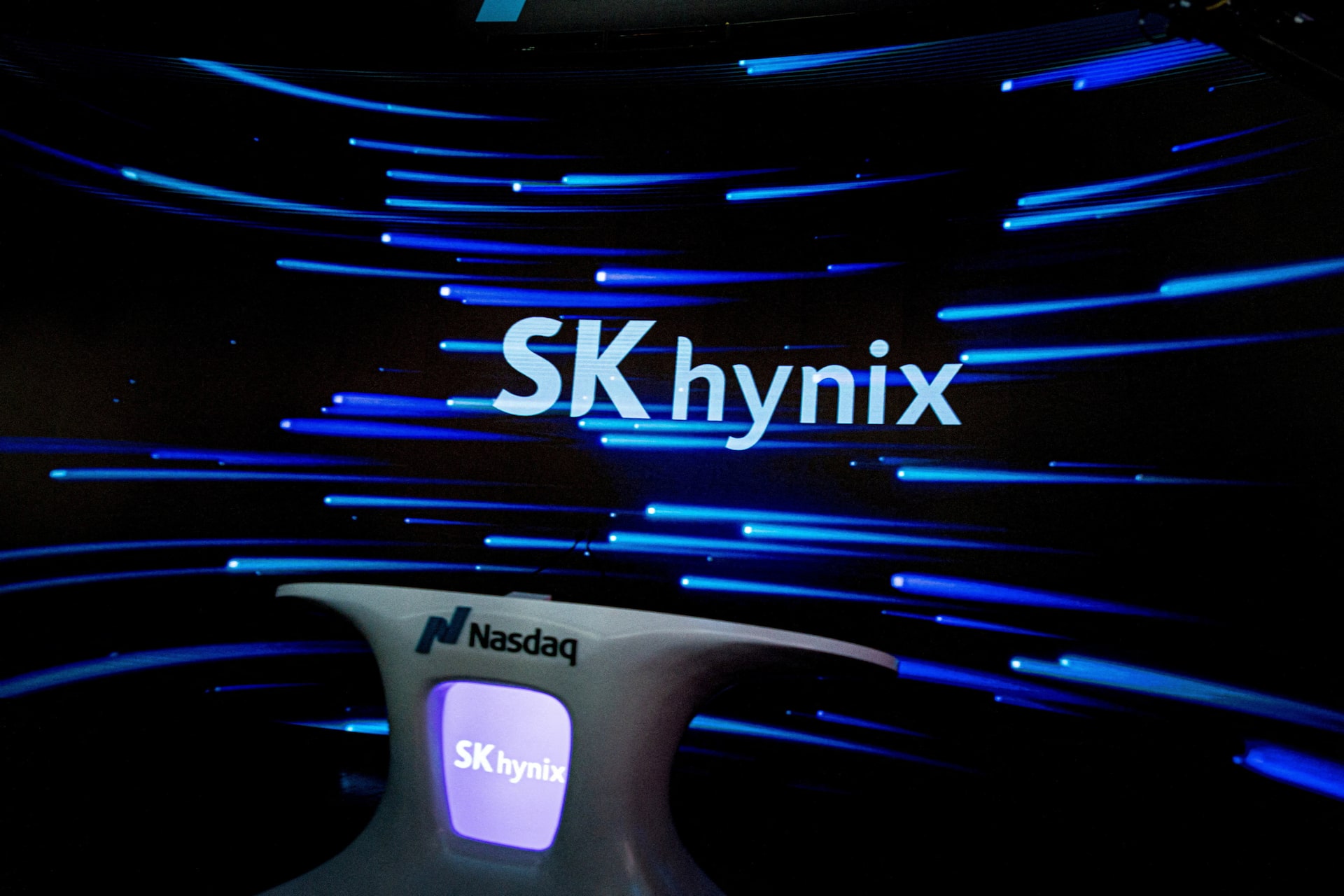
A logo of Semiconductor and memory chip company SK Hynix during the company’s debut at the Nasdaq market in New York City, U.S., July 10, 2026. REUTERS
SINGAPORE/SEOUL, Sept 10 (Reuters) – Eye-popping shareholder-return plans from Samsung Electronics (005930.KS), and SK Hynix (000660.KS), opens new tab have become an early test of South Korea’s corporate reform drive, with investors welcoming the windfall but saying more is needed to narrow the country’s decades-old valuation gap.
An AI-driven boom has left South Korea’s two largest companies flush with cash, fuelling investor demands for larger payouts.
Yet the plans, worth more than 130 trillion won ($97 billion) combined for this year alone, have not fully satisfied investors. South Korea’s benchmark KOSPI (.KS11), opens new tab, in which the two chipmakers account for nearly half of the index’s weighting, remains about 26% below the record high reached in June.

The muted reaction underscores the challenge facing President Lee Jae Myung’s “Value-Up” programme, launched in 2024 to tackle the so-called Korea discount, under which Korean stocks trade at lower valuations than global peers because of concerns over corporate governance, capital allocation and shareholder rights.