

Table of Contents
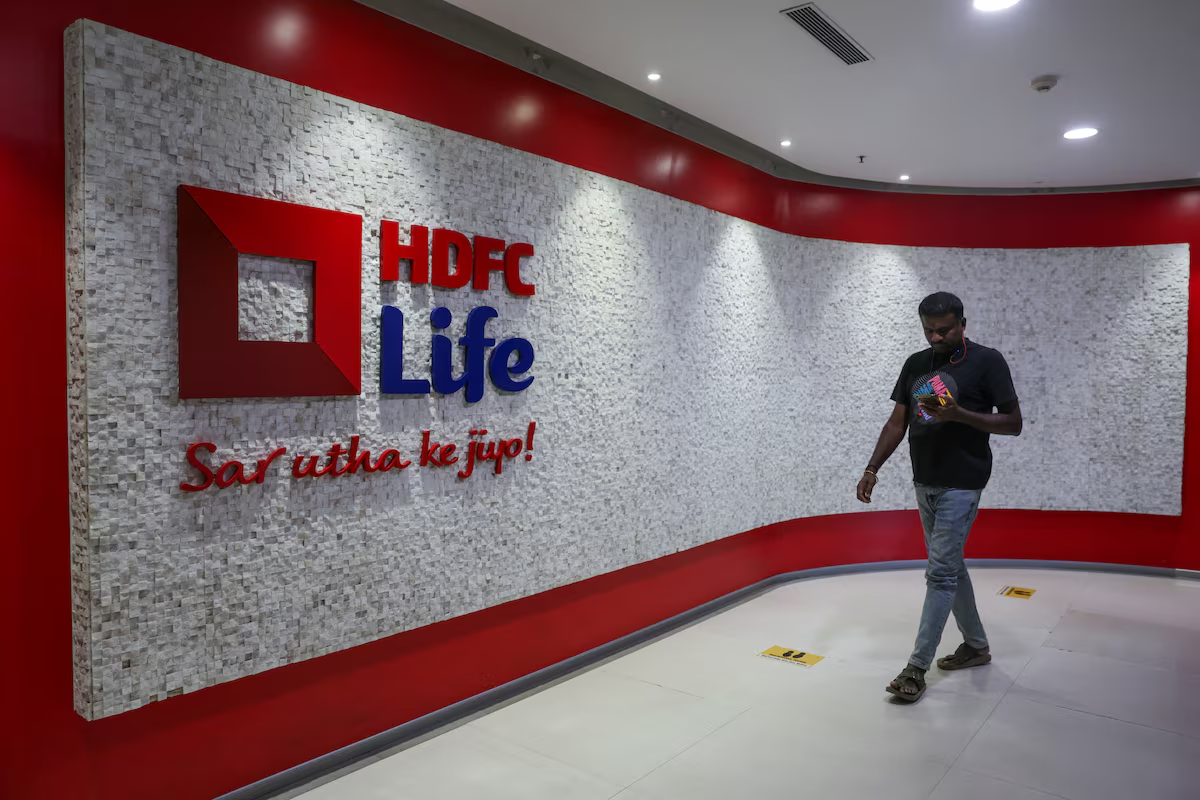
A man walks past the logo of HDFC Life insurance at the office in Bengaluru, India, June 11, 2026. REUTERS
MUMBAI, Sept 24 (Reuters) – India’s insurance regulator has proposed capping what insurers pay banks, brokers and agents to sell policies, a move that could eventually make insurance cheaper for customers but squeeze distributors’ incomes.
The proposed norms introduced in a discussion paper, issued late on Wednesday, are part of the Insurance Regulatory and Development Authority of India’s broader effort to reform the sector after New Delhi opened it to 100% foreign ownership this year.
Shares of insurance distributors and lenders with significant insurance income fell on Thursday.

The proposals are not final and could change based on the feedback the regulator receives before October 25.
WHY IS THE IRDAI DOING THIS?
Distributor compensation has risen faster than underlying business. Life insurers paid 608 billion rupees ($6.34 billion) in commissions in fiscal 2025, up 18%, while premium growth was just 6.73%, IRDAI data shows.
India is the world’s 10th-largest insurance market, yet insurance penetration remains low compared to the global average.
The proposed changes are part of planned reforms as the IRDAI seeks to bring coverage closer to global levels.
WHAT ARE THE BIG CHANGES?
The IRDAI has proposed reintroducing commission caps across products, reversing its 2023 decision to scrap them.
The regulator wants distributors to earn less for selling simple products and more for complex ones. Banks and brokers that represent multiple insurers would face commission caps at a lower level than agents tied to a single insurer.
For life insurance, the IRDAI wants to reduce large upfront payouts and spread compensation over the life of a policy.
For compulsory third-party motor insurance, no commission would be paid on new vehicles, while only limited payouts would be allowed on renewals for older vehicles.
WHAT ARE THE NEW LIMITS?
In the life insurance segment, commissions for banks and brokers could stand at 5% to 20% of the first-year premium, compared to the more-than-40% rates currently in play for several products.For health insurance, commissions would be capped at 15% in the first year and 5% on renewals, compared to the over-30% fee charged by distributors today.
The IRDAI’s proposal also says that third-party insurance on new vehicles would carry no commissions compared to current rates of around 25% to 50% in the motor insurance segment.
Sales in small towns and rural areas would attract an additional 10% to 20%.
WHAT DOES IT MEAN FOR CUSTOMERS?
Commissions are embedded in premiums, according to the IRDAI, meaning lower distribution costs could eventually reduce prices. But there is no guarantee that insurers will pass on the savings.
The proposals would also bar banks from making loans conditional on the purchase of insurance. If a bank offers a cheaper loan rate with insurance, it would have to disclose both rates and allow customers to buy cover from any insurer.
The changes may also curb the sale of policies that customers later abandon.
WHICH BUSINESSES WILL BE HIT MOST?
Banks that distribute life insurance face the greatest pressure, while insurers depending on bank-linked sales could take a short-term hit.
While the reforms are aimed at lowering policy costs and curbing mis-selling, analysts said they could disrupt existing distribution models, weighing on growth in an industry that relies heavily on channels such as agent and bancassurance — the sale of insurance through banks — for business.
Dealer-linked motor brokers could also be affected.
($1 = 95.8850 Indian rupees)
Reporting by Ashwin Manikandan; Editing by Janane Venkatraman