

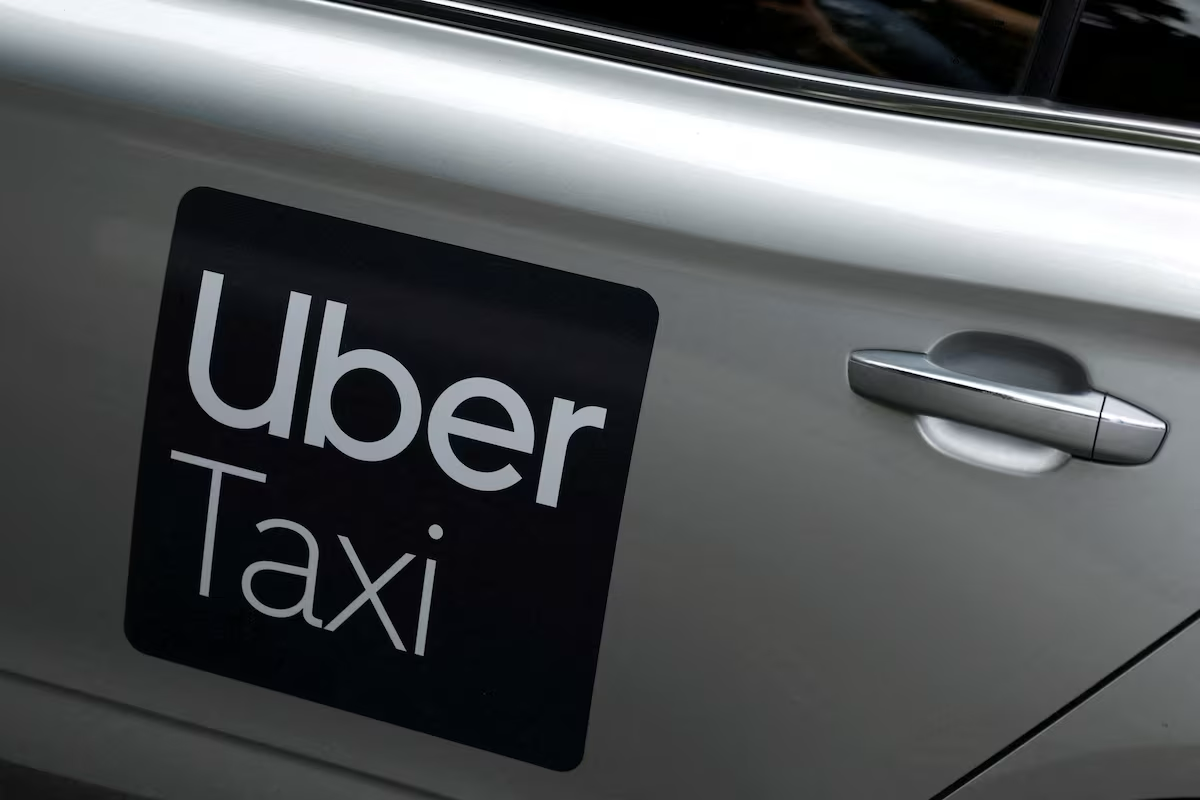
The Uber logo is seen on the side of a taxi, in Dublin, Ireland, June 29, 2025. REUTERS
Sept 2 (Reuters) – Uber Technologies will lay off about 3,300 employees, or 10% of staff, in its largest cuts since the COVID-19 pandemic, to better navigate the rise of robotaxis encroaching on its ride-hailing business.
The cuts will flatten management layers, reducing organizational complexity that was built during a period of rapid growth but is now proving a hurdle to decision-making, CEO Dara Khosrowshahi said in a note to employees on Wednesday.
Unlike several tech executives, Khosrowshahi did not blame the cuts on AI even as a push to adopt the technology and the efficiencies it can unlock have driven large cuts in the industry this year, with tracking website layoffs.fyi putting the overall number at over 123,000 across nearly 390 companies.

“A leaner organization will mean clearer ownership, faster decisions, and more time spent building rather than coordinating. It will also generate savings that we intend to reinvest in growth, innovation, and the capabilities that will matter most over the coming years,” Khosrowshahi said.
Uber shares rose nearly 2%. The stock has underperformed the S&P 500 and rival Lyft this year with a near 8% decline driven by worries about growing competition.
DoorDash Instacart and local delivery platforms have been putting pressure on Uber Eats, forcing the company to turn to deals such as its $14.8 billion Delivery Hero acquisition to build scale and compete better.
GROWING ROBOTAXI COMPETITION
Some of the concern stems from reports of growing tension between Uber and Waymo, the biggest U.S. robotaxi operator, which runs its cars through Uber’s app in Austin and Atlanta.
Waymo has also been expanding into new markets without Uber, while rivals such as Tesla double down on robotaxis, feeding fears that a growing fleet of driverless cars could erode Uber’s lucrative role as the middleman between vehicles and riders.
To defend its position, Uber plans to put more than $10 billion into robotaxis in the coming years, backing the companies developing autonomous-driving systems and positioning itself as a go-to marketplace for driverless rides.
