Smoke rises from an explosion at an unknown location, during what U.S. Central Command (CENTCOM) says are strikes on Iran, in this screen grab taken from a handout.
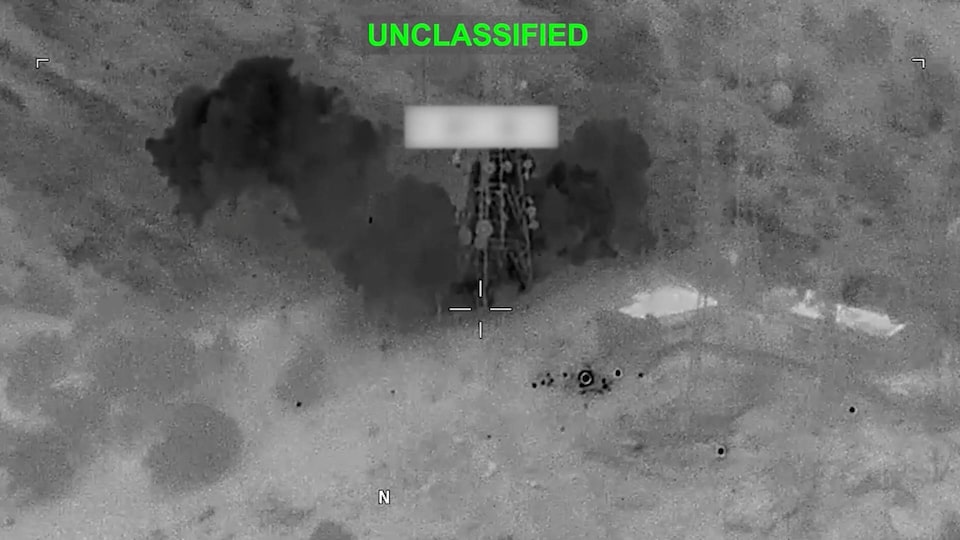
 Smoke rises from an explosion at an unknown location, during what U.S. Central Command (CENTCOM) says are strikes on Iran, in this screen grab taken from a handout.
WASHINGTON, July 18 (Reuters) – The U.S. military said late on Thursday it completed its latest wave of strikes on Iran that were carried out at President Donald Trump’s direction and marked a seventh consecutive night of American attacks.
Here are details:
-
“U.S. forces employed fighter aircraft, aerial drones, and warships in addition to other assets,” the U.S. Central Command said in a statement.
-
U.S. strikes hit “surveillance sites, military logistics infrastructure, underground weapons storage, and maritime capabilities,” it added.
-
Iran in turn struck U.S. allies in the Gulf on Friday, as both sides targeted infrastructure while shipping in the Strait of Hormuz came under further assault.
-
Iranian state media earlier said at least five bridges were struck in the south in U.S. attacks on Friday.
-
Seven people were reported killed in attacks on bridges in the southern port of Bandar Khamir, where the train station was also hit.
-
An airport was reported hit further east and away from the coast in Iranshahr, in a province bordering Pakistan.
-
Authorities in U.S. ally Kuwait said one of the country’s power generation and water desalination stations had been hit in an Iranian attack.
-
Trump this week reiterated threats to hit Iranian energy targets while also threatening to target bridges next week.
-
The 1949 Geneva Conventions on humanitarian conduct in war prohibit attacks on sites considered essential for civilians.
-
After Trump’s past threats to strike such targets, international law experts in the U.S. said earlier this year such attacks may amount to war crimes.
-
Trump received widespread condemnation in April when he threatened to destroy Iran’s entire civilization before reaching a ceasefire with Tehran.
-
The Iran war began when the U.S. and Israel attacked Iran on February 28 and Iran responded with its own strikes on Israel and Gulf states that host U.S. bases.
-
U.S.-Israeli strikes on Iran and Israeli attacks on Lebanon during the war have killed thousands and displaced millions.
-
The war has raised oil prices and shaken global markets.
Reporting by Kanishka Singh and Jasper Ward in Washington; Editing by Muralikumar Anantharaman and Stephen Coates.