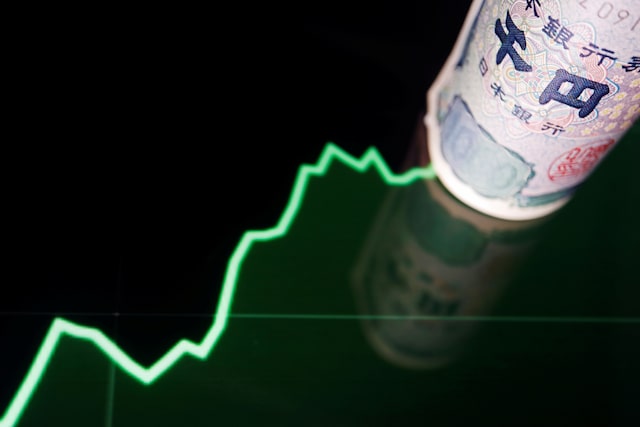
A portrait of Britain’s King Charles is displayed on a British five pound note in this illustration taken in Manchester, Britain, November 25, 2025. REUTERS
April 21 (Reuters) – The pound dipped on Tuesday, remaining within a recent range as investors monitored Middle East developments that could spark a fresh rush to the safe-haven dollar.
British data showed the jobless rate fell unexpectedly, although that drop reflected rising numbers of students not looking for work rather than rising employment, while average weekly earnings fell.
Analysts argued that sterling didn’t rise because the big drop in the February unemployment rate probably overstated the health of the British labour market.
Under pressure from political opponents to step down, British Prime Minister Keir Starmer on Monday laid the blame on foreign ministry officials over the appointment of a U.S. ambassador, saying they had kept him in the dark.
The former top official in Britain’s foreign ministry who was sacked over Peter Mandelson’s appointment as U.S. ambassador said on Tuesday he had come under a lot of pressure from the prime minister’s private office to resolve his security clearance quickly.
This “is perhaps one reason why sterling is not selling off more,” said Chris Turner, global head of markets at ING, after mentioning the Polymarket betting site, which gives a 40% probability of Starmer leaving office by June and a 67% chance by December.
The pound was last down 0.28% at $1.3496. The euro was 0.1% higher against the pound at 87.10 pence.
The greenback rose on Tuesday after falling a day earlier as uncertainty over the U.S.-Israeli war on Iran kept investors on the sidelines.
Investors are also closely watching bets on future Bank of England rate hikes.
Traders are now almost fully pricing one BoE rate hike this year, while indicating two rate increases for the European Central Bank.
Some analysts flagged that the pound performed quite well against the euro while markets removed a lot of the expected Bank of England tightening this year.
Hopes for a Middle East peace deal eased inflation fears and tempered expectations of a rapid policy tightening by central banks, including the BoE. Currencies tend to strengthen when central banks raise rates and weaken when they cut them.
ING said it expects no BoE rate hikes in 2026, adding that one tightening move may not be priced out until oil prices drop.
Reporting by Stefano Rebaudo; Editing by Thomas Derpinghaus