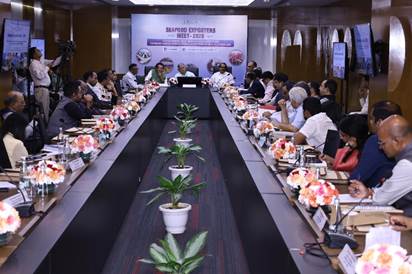
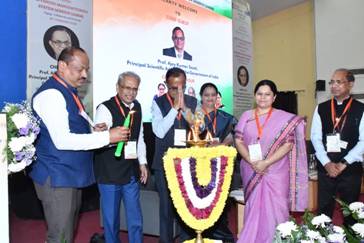
The Office of the Principal Scientific Adviser to the Government of India (OPSA) and Ministry of Heavy Industries (MHI) coorganised a Stakeholder Consultation on 23rd February 2026 at CMTI with support from the Central Manufacturing Technology Institute (CMTI), Bengaluru, to discuss the modalities of a cohesive Advanced Manufacturing Strategy.
The consultation brought together representatives from Government, industry associations, manufacturing enterprises, MSMEs, startups, academia, research institutions, and technology developers to provide structured inputs on strengthening India’s capabilities in advanced manufacturing systems. Deliberations focused on critical domains such as CNC machine tools and controllers, advanced machines, testing and metrology infrastructure, robotics and robotic arms, and advanced additive manufacturing (3D & 4D printing).
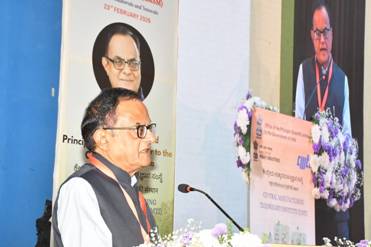
Addressing the gathering, Prof. Ajay Kumar Sood, Principal Scientific Adviser to the Government of India, emphasised that advanced manufacturing systems form the backbone of contemporary industrial ecosystems and are pivotal to India’s aspirations in aerospace, defence, electronics, automotive, energy, and medical devices. He underscored that technological sovereignty and resilient supply chains require strong indigenous capabilities in high-precision machines, production systems, CNC controllers, sensors, and quality infrastructure. Prof. Sood highlighted that advanced manufacturing is central to the vision of Viksit Bharat and called for sustained coordination among Government, industry, and research institutions. He cited the industry-led Research, Development and Innovation (RDI) Fund and the grant-based Anusandhan National Research Foundation (ANRF) as key enablers supporting deep-technology research and translational innovation. He stressed localisation of critical technologies, alignment with global standards, enhanced Industry 4.0 readiness and advanced skilling initiatives.
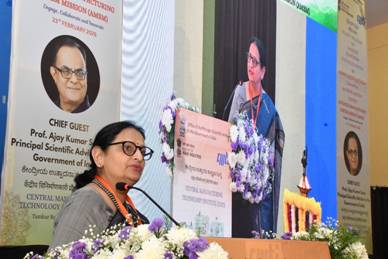
In her special remarks, Dr. Parvinder Maini, Scientific Secretary, OPSA, elaborated on the exhaustive consultative process undertaken for the past one year to shape the contours of Advanced Manufacturing Programs. She also emphasised the need for a systems-level approach and a Technology Readiness Level (TRL)-aligned mission architecture to bridge the gap between research and industrial deployment. She highlighted the importance of targeted R&D, shared testing infrastructure, internationally benchmarked certification systems, and strengthened industry-academia collaboration.
S. Kris Gopalakrishnan, President of the Governing Council of CMTI and Co-founder of Infosys, noted that the capital goods sector is fundamental to advanced manufacturing and must enhance technological depth to support high-value industries. He highlighted CMTI’s contributions through innovation and industry collaboration and called for sustained partnerships to reduce import dependence and enhance technological sovereignty.
Shri Vijay Mittal, Joint Secretary, MHI, highlighted the need to recognise the contributions of capital goods, particularly from the machine tool sector. He noted that the MHI, through its capital goods scheme, has supported indigenous efforts in several capital goods and establishment of test infrastructure. The proposed mission on advanced manufacturing systems will provide sustainable growth in the country. Dr. Rakesh Kaur, Adviser/Scientist ‘G’, OPSA, also emphasised that the mission framework is still being shaped and that inputs from stakeholders across Government, academia, and industry would be critical in identifying priorities, addressing gaps, and defining practical implementation pathways.
The inaugural session also featured welcome remarks by Dr. Nagahanumaiah, Director, CMTI, and context presentations from Ms Mohini Kelkar, President IMATM and Prof. B. Ravi, Director, NIT Surathkal.
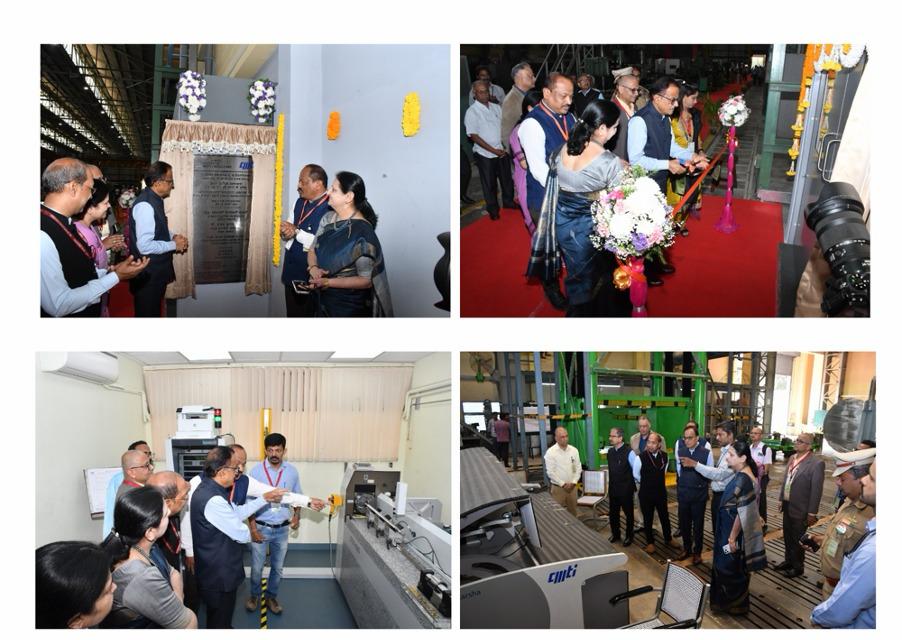
Following the inaugural session, the dignitaries visited laboratory and witnessed demonstrations of several machines and instruments designed and developed by the Central Manufacturing Technology Institute over the past few years. The technologies showcased included vertical planetary mixing machines, aerospace Line Replaceable Units (LRUs), specialised test rigs, automatic optical inspection systems, and developments from the Sensor Technology Development Centre.
On this occasion, Prof. Sood, formally inaugurated the Ball Screw Lead Error Testing and Certification System, the first such facility in India, established at CMTI under the Capital Goods Scheme of the Ministry of Heavy Industries.
The consultation thereafter progressed into three parallel thematic technical sessions focusing on key advanced manufacturing domains, namely:
(i) CNC Machine Tool Control Systems, Advanced and Special Purpose Machines, Testing and Metrology,
(ii) Robotics and Robotic Arms, and
(iii) Advanced Additive Manufacturing Systems (3D and 4D Printing).
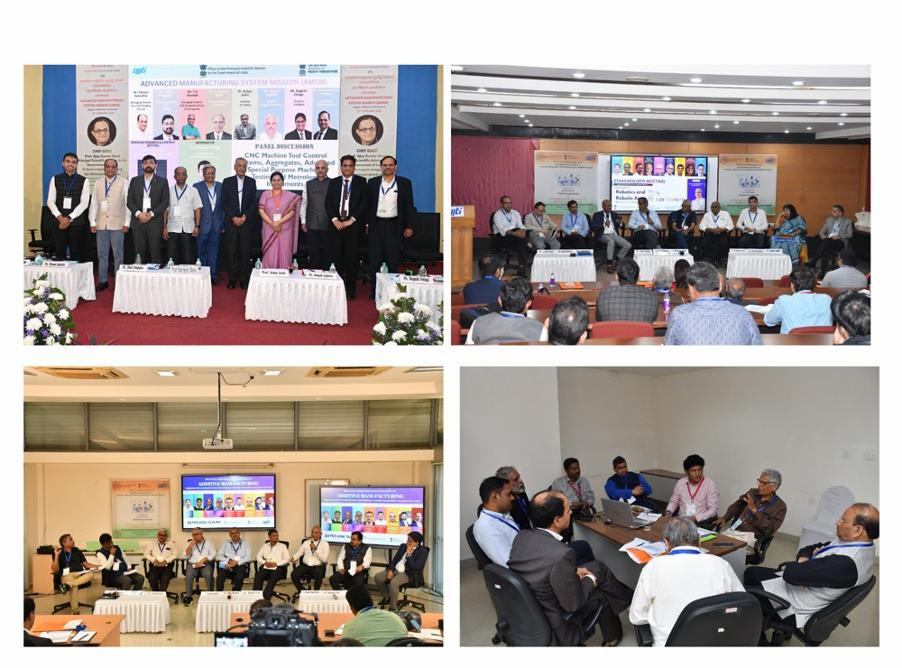
The discussions highlighted critical technology gaps and value chain challenges in high end machine tools and aggregates, the need for localisation of critical components, strengthening domestic manufacturing capabilities, and the role of policy support and public procurement in accelerating adoption of indigenous technologies. Deliberations on robotics underscored robotics and physical AI as key enablers of advanced manufacturing and noted ecosystem constraints, limited scale and gaps in precision supply chains, with emphasis on coordinated national efforts and active industry participation. The session on additive manufacturing focused on materials and process qualification, shared prototyping and validation infrastructure, and pathways for industrial scale up, with emphasis on industry defined problem statements and stronger academia industry collaboration. The sessions were moderated by Dr. Vishwas R. Puttige, CEO and Director, Amace Solutions Pvt. Ltd.; Prof. B. Gurumoorthy, Professor, Indian Institute of Science; and Dr. Chandrashekar U. C., Vice Chancellor, Godavari Technical University, with participation from industry and academic institutions.
Breakout working groups of 16 identified sub-themes discussed strategic technology priorities, collaborative R&D projects, budgets, timelines, and risk mitigation measures. Cross-group synthesis highlighted infrastructure needs and policy recommendations essential for a mission-oriented approach.
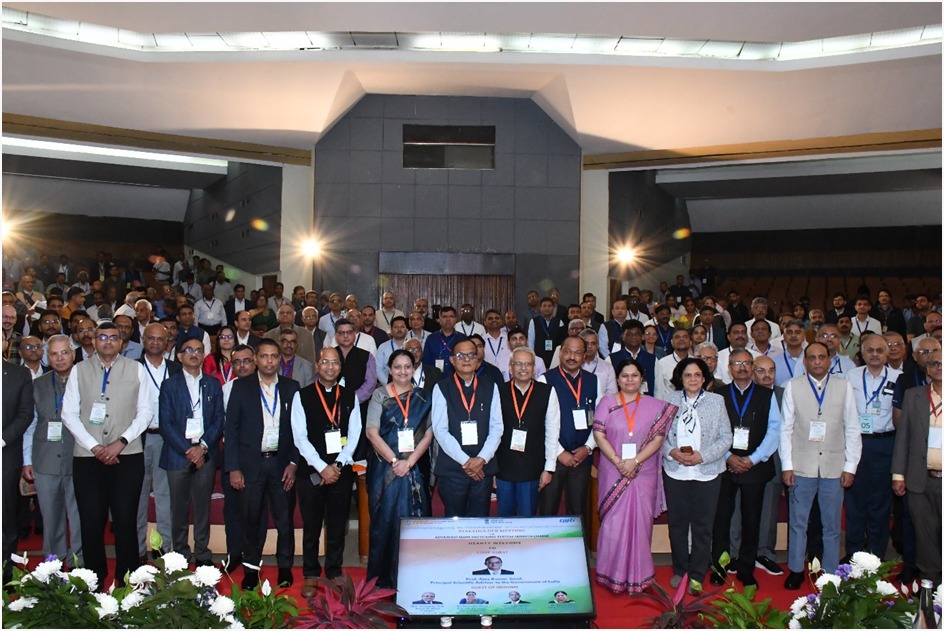
The consultation attracted around 220 stakeholders, including the Government, industry, MSMEs, startups, academia, and research institutions. The inputs will further feed into the draft Advanced Manufacturing Systems proposal and support the development of a coordinated national architecture that integrates R&D, validation, testing, and industrial deployment to strengthen India’s advanced manufacturing ecosystem.