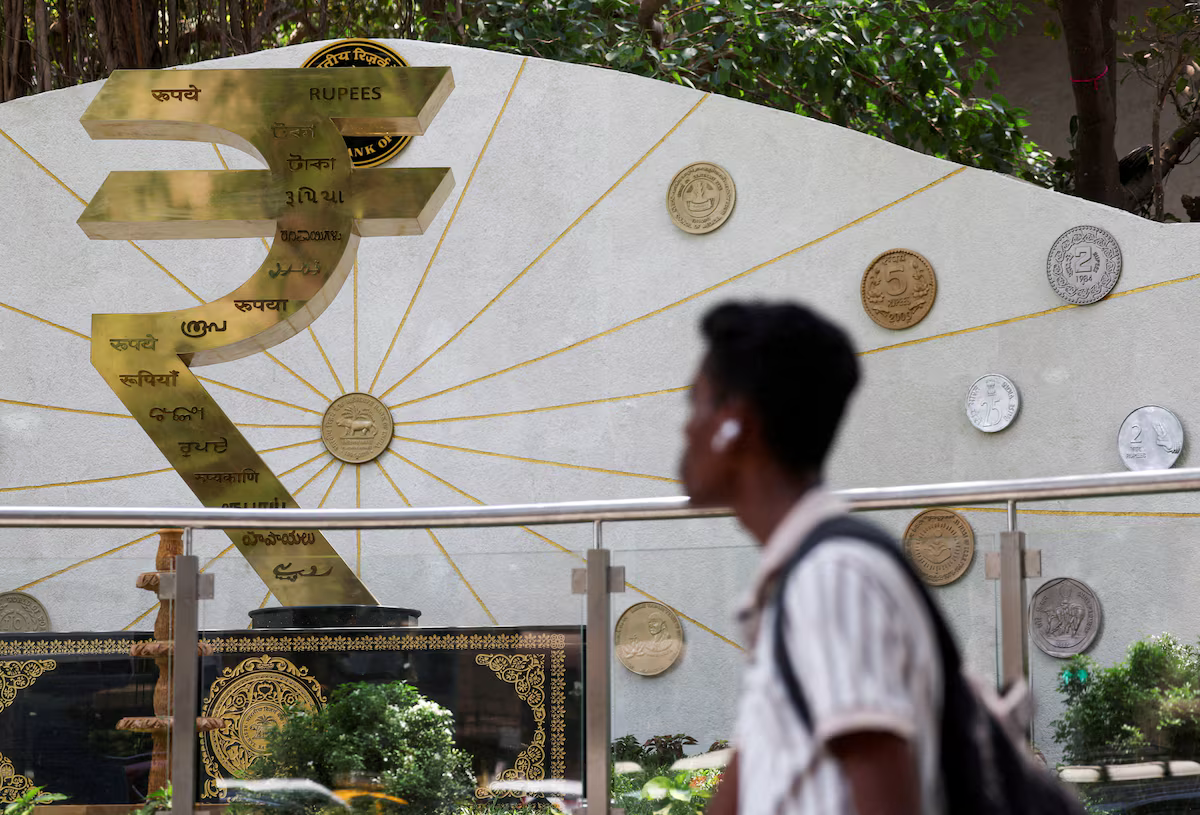
A man walks past an installation of the Rupee logo and Indian currency coins outside the Reserve Bank of India (RBI) headquarters in Mumbai, India, April 9, 2025. REUTERS
MUMBAI, April 10 (Reuters) – The Indian rupee on Friday will have to contend with the likely drying up of flows that the central bank’s directive had drawn in to support it, and with oil prices remaining high.
The rupee is expected to open largely flat, having settled at 92.6575 per dollar on Thursday, when it posted a modest decline and broke a four‑day winning run.
In recent sessions, the currency has drawn support from the Reserve Bank of India’s move on March 27 to impose limits on onshore positions of banks, which forced them to sell dollars in the local market.
With most positions unwound ahead of RBI’s Friday deadline, a key pillar of support for the rupee has faded, bankers said.
If you take the RBI out of the equation, there is “little doubt” the direction of the rupee is lower, a currency trader at a bank said, adding that he expects 92.50 to be a major resistance that will likely not be taken out.
OIL, EQUITY FLOWS HEADWINDS
Two factors that have been major drags on the rupee in recent weeks remain – high oil prices and weak equity flows.
Oil prices, after an initial plunge following the Iran ceasefire announcement, have been inching higher and remain well above pre‑conflict levels. There is lingering wariness over how durable the U.S.–Iran truce will be, with fighting still taking place.
Brent crude for June delivery inched up in Asian trade to $96.70, after having dropped to near $90 in the immediate reaction to the ceasefire.
Meanwhile, in the two sessions since the ceasefire, foreign investors have been net sellers of Indian equities. While the pace of outflows has slowed, the fact that investors are still selling is telling, the currency trader said.
Reporting by Nimesh Vora; Editing by Harikrishnan Nair