Dy Chief Minister Odisha: Data must be used responsibly with a balance between openness and necessary confidentiality
Chief Secretary Odisha: Standards-driven interoperable approach, supported by federated architectures is key for unlocking value of data
Chairman CBC: It is essential to strengthen governance and service delivery through technology and organizational adoption.
Secretary MoSPI: Need to break silos and promote open, standardised, and interoperable data across sectors
The Ministry of Statistics and Programme Implementation (MoSPI) organized one-and-a-half-day National Deliberative Summit on “Harmonizing Administrative Data for Governance“ with States/UTs and other stakeholders on 29-30th April 2026 in Bhubaneswar, Odisha. The Summit aimed to build consensus on action plans and timelines for harmonizing administrative data and it has brought together around 300 stakeholders from over 31 State/UT Governments, Central Ministries/ Departments, Researchers and Technical experts from International Organizations/Academic Institutions/Private Organizations etc. to adopt common standards and to enable interoperable systems for better policymaking and governance.
The National Deliberative summit was inaugurated by Hon’ble Deputy Chief Minister, Government of Odisha, Shri Kanak Vardhan Singh Deo and distinguished dignitaries including Smt. S. Radha Chauhan, Chairperson, Capacity Building Commission; Dr. Saurabh Garg, Secretary, MoSPI; Shri. Deoranjan Kumar Singh, Development Commissioner-cum-ACS, Government of Odisha graced the occasion.
At the outset, P. R. Meshram, Director General (Data Governance), MoSPI extended a warm welcome to the distinguished dignitaries and emphasised that MoSPI remains fully committed to supporting States in their journey towards harmonized data systems for effective decision-making.
Setting the context of the meeting, Dr. Saurabh Garg, Secretary, MoSPI emphasised the Hon’ble Prime Minister’s vision of adopting a positive and open attitude towards data. He asserted the need to break silos and promote open, standardised, and interoperable data across sectors. He highlighted structured data-sharing to enhance governance and socio-economic outcomes. He also noted that under the System of National Accounts 2025, data is now recognised as an economic asset.
In the inaugural address, Shri Kanak Vardhan Singh Deo, Hon’ble Deputy Chief Minister, Government of Odisha emphasised that data is the need of the hour, highlighting its importance for achieving the vision of Hon’ble Prime Minister, Viksit Bharat @2047 and Odisha’s 2036 goals, particularly in the field of agriculture and energy through data-driven policymaking, while also noting that data must be used responsibly with a balance between openness and necessary confidentiality.
Ms Radha Chauhan, Chairperson, Capacity Building Commission highlighted that, to fully leverage the potential of Artificial Intelligence, it is essential to strengthen both governance and service delivery through a balanced focus on two key pillars namely, technology and organizational adoption. This requires rethinking and revamping existing procedures that often act as barriers to making data AI-ready. Deo Ranjan Kumar Singh, Development Commissioner-cum-Additional Chief Secretary (ACS), Government of Odisha, highlighted the importance of timely availability of data and the need for actionable insights supported by analytics, noting that the lack of accessible data at the field level poses challenges for effective decision-making.
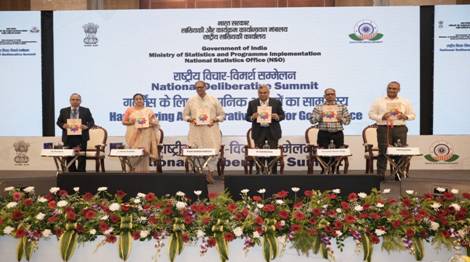
On the occasion of the inaugural session of the summit, a video on “Data Dividend” was showcased the essence of the Theme of the Conference and MoSPI released its publication namely “Women and Men in India 2025: Selected Indicators and Data”, offering a comprehensive overview of the gender landscape in India, presenting selected indicators and data across key areas like population, education, health, economic participation, and decision-making, all sourced from various Ministries / Departments /Organizations.
Day 1 (29th April, 2026) was dedicated for deliberations on the theme of the summit covering in four sessions including a panel discussion. Session started with presentations of States showcasing the initiatives taken in harmonizing administrative data through integrated platforms, common identifiers, and interoperable, API-based systems. Kerala showcased an integrated multi-department digital ecosystem; Maharashtra a unified State Business Register; Assam its Data Policy 2026 with Aadhaar-enabled integration; Bihar an AI-powered Data Lab Portal, and Delhi a data unlock model converting records into National Metadata Structure (NMDS) 2.0-compliant machine-readable formats.
Discussions also focused on a roadmap to harmonize administrative data through a multi-source ecosystem, tackling issues like data silos, interoperability gaps, and data quality. The plan emphasises initiatives like NMDS 2.0, standardisation, common identifiers, metadata, and API-based data sharing to enable efficient, integrated systems. A panel discussion on Data harmonization guidelines and ecosystem development was also held which emphasised on the need for a robust ecosystem built on strong governance frameworks, scalable platforms, capacity building, and continuous data quality assurance for data harmonization and effective data-driven governance.
Discussions were also focused on leveraging data reuse for governance, covering frameworks, interoperability platforms, and real-world experiences like Tamil Nadu’s data linkage initiatives and insights on the DPDP Act, 2023, technology solutions for data harmonization.
On Day 2 (30 April 2026), the workshop focused on strengthening the foundations of data structure, covering metadata standards, data modelling, knowledge graphs, data quality, and cataloguing to enable structured and reusable datasets. Building on this, the impact session highlighted AI-enabled data access and microdata analytics. As a way forward, the high level panel discussion was held wherein the panel noted that data harmonization is an iterative and long-term process requiring sustained political commitment, institutional ownership, and coordinated action. By adopting a phased, flexible, and context-specific approach, while leveraging existing digital public infrastructure strengths, states can progressively build integrated data ecosystems that enhance governance efficiency, transparency, and citizen-centric service delivery.
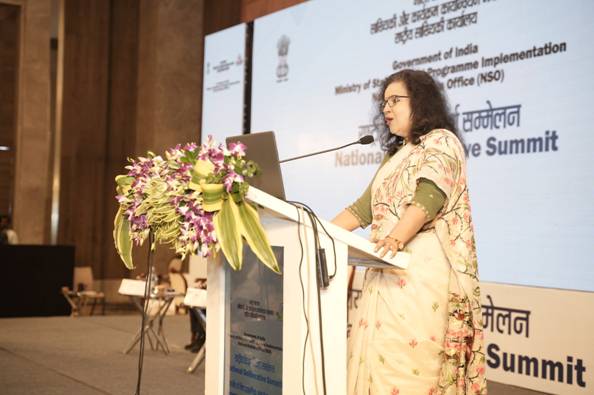
The concluding session of the summit was graced by Smt. Anu Garg, Chief Secretary, Government of Odisha. She highlighted the Government of Odisha’s efforts to strengthen its statistical system, including the recruitment of over 600 statistical personnel, the rollout of Data Policy 2.0 aligned with the Digital Personal Data Protection Act, a data dissemination policy, and a dynamic statistical web portal, etc. She affirmed the state’s commitment to improving data quality, harmonization, accessibility, and ensuring that data receives the importance it rightfully deserves. Going forward, a phased, standards-driven and interoperable approach, supported by federated architectures, user-centric platforms, and emerging technologies like AI, will be key to unlocking the full value of data for policymaking and service delivery.