
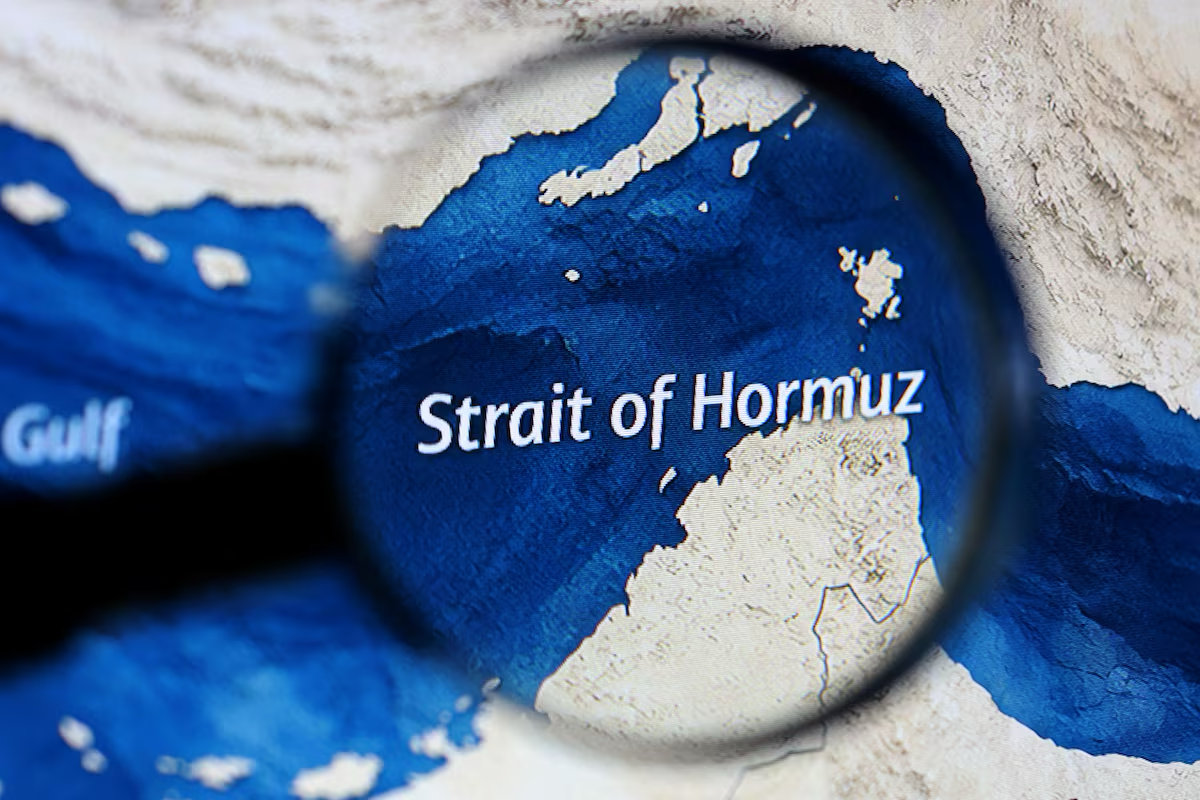
A map showing the Strait of Hormuz is seen in this illustration taken March 23, 2026. REUTERS
A look at the day ahead in European and global markets from Ankur Banerjee
The contrasting messaging from Iran and the U.S. around a possible ceasefire in the Gulf has left investors reluctant to place major bets as cautious optimism around an end to the conflict meets the sobering reality of elevated energy prices.
The uncertainty has fuelled choppy trading with stocks swinging between gains and losses during Asian hours. European futures indicate a lower open but much will depend on the fast-evolving developments in the Middle East.
So here’s where we are: Iran said it was reviewing a U.S. proposal for ceasefire but had no intention of holding talks to wind down the conflict. U.S. President Donald Trump, meanwhile, said Iran was desperate to make a deal to end nearly four weeks of fighting.
With the Strait of Hormuz, a conduit for a fifth of the world’s oil and liquefied natural gas, effectively closed, countries across the world are grappling with fuel shortages, supply shocks and rising costs.

South Korean President Lee Jae Myung asked the public on Thursday to conserve electric power, while the Philippines’ energy market regulator said it had suspended the country’s wholesale electricity spot market across all its three grids.
While oil prices above $100 per barrel will cast a shadow across the global economy, some countries are more exposed and less able to deal with rising prices.
All that has meant investors are doing what they have done all this month. Sell stocks and bonds. The only haven? The dollar.
Asian stocks have felt the brunt of the selling with MSCI’s broadest index of Asia-Pacific shares outside Japan set to fall 8.7% over the month, its biggest monthly drop since October 2022.
Foreign investors have sold $50 billion worth of regional stocks since the U.S. and Israel began their strikes on Iran on February 28, with Tehran later launching its own attacks and a new front opening in Lebanon.
The pan-European STOXX 600 remains under pressure as Europe’s dependence on oil imports has weighed on equities since the start of the war. The broad index is down more than 7% while the S&P 500 is down just over 4% in March.

By Ankur Banerjee; Editing by Kate Mayberry