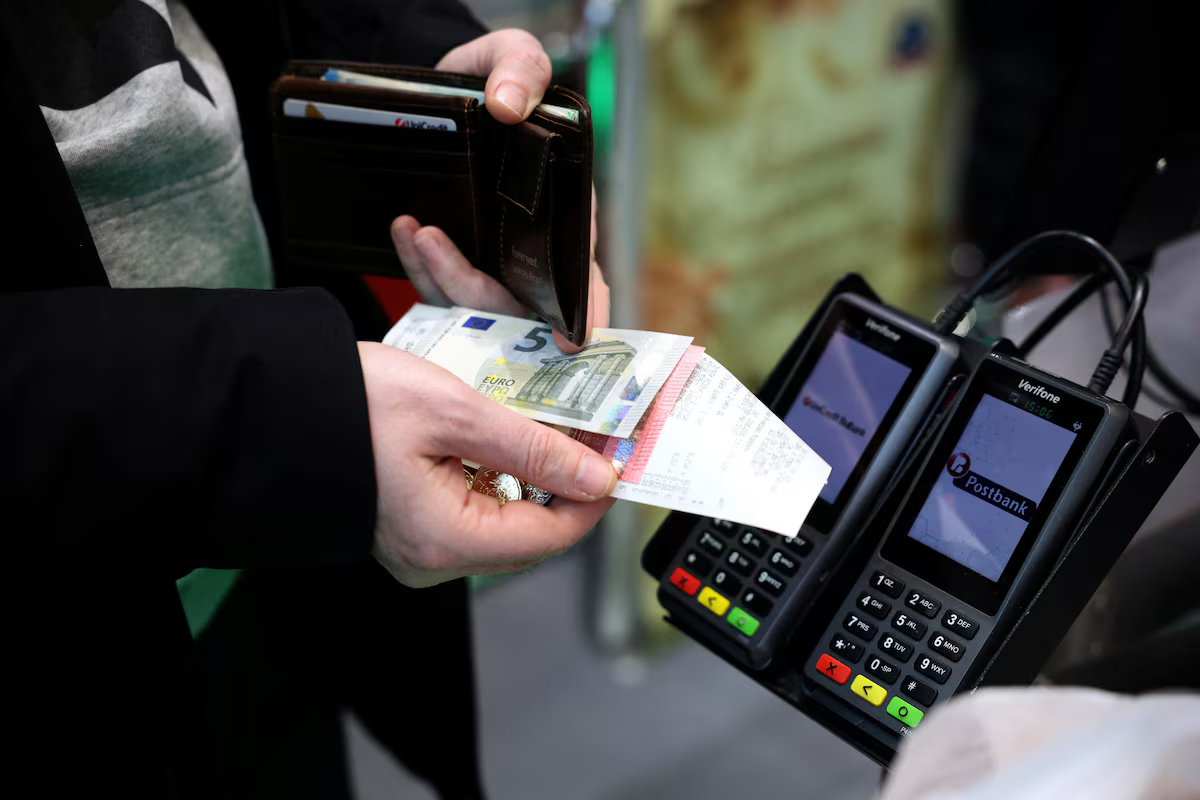
A person receives change in euros as they shop in Fantastico store, on the day of the country’s accession to the Eurozone, in Sofia, Bulgaria, January 1, 2026. REUTERS
SOFIA, April 7 (Reuters) – Bulgaria suffered only a small inflation bump when it adopted the euro on January 1 and public support for the common currency is now rising quickly, with the war in Iran offering a potential boost, Central Bank Governor Dimitar Radev said.
Public support for the euro was relatively low in the lead-up to the currency switch and Bulgaria’s former president, seen as a favourite to become prime minister after an election on April 19, has been an outspoken critic, arguing that prices would rise, making one of the EU’s poorest countries less affordable.
“Our analysis suggests that the impact was limited and largely one-off, in the range of 0.3 to 0.4 percentage points, broadly comparable to Croatia’s experience,” Radev, now a member of the ECB Governing Council, told Reuters in an interview.
Bulgaria’s inflation actually slowed in January, to 2.3% from 3.5% in the previous month, and stood broadly in line with the euro zone figure in March.
The mild inflation impact helped boost support for the euro, albeit from relatively low levels, and Radev said the war in Iran may actually raise support further as households see the shield it provides.
“Household support stood at 45% before accession and has since risen to 54%,” he said. “In the business community, support was already strong and is now in the 70s.”
“The current environment is likely to make the benefits more visible, as more people recognise the value of being part of the union rather than remaining outside it,” Radev said.
Reporting by Balazs Koranyi Editing by Gareth Jones