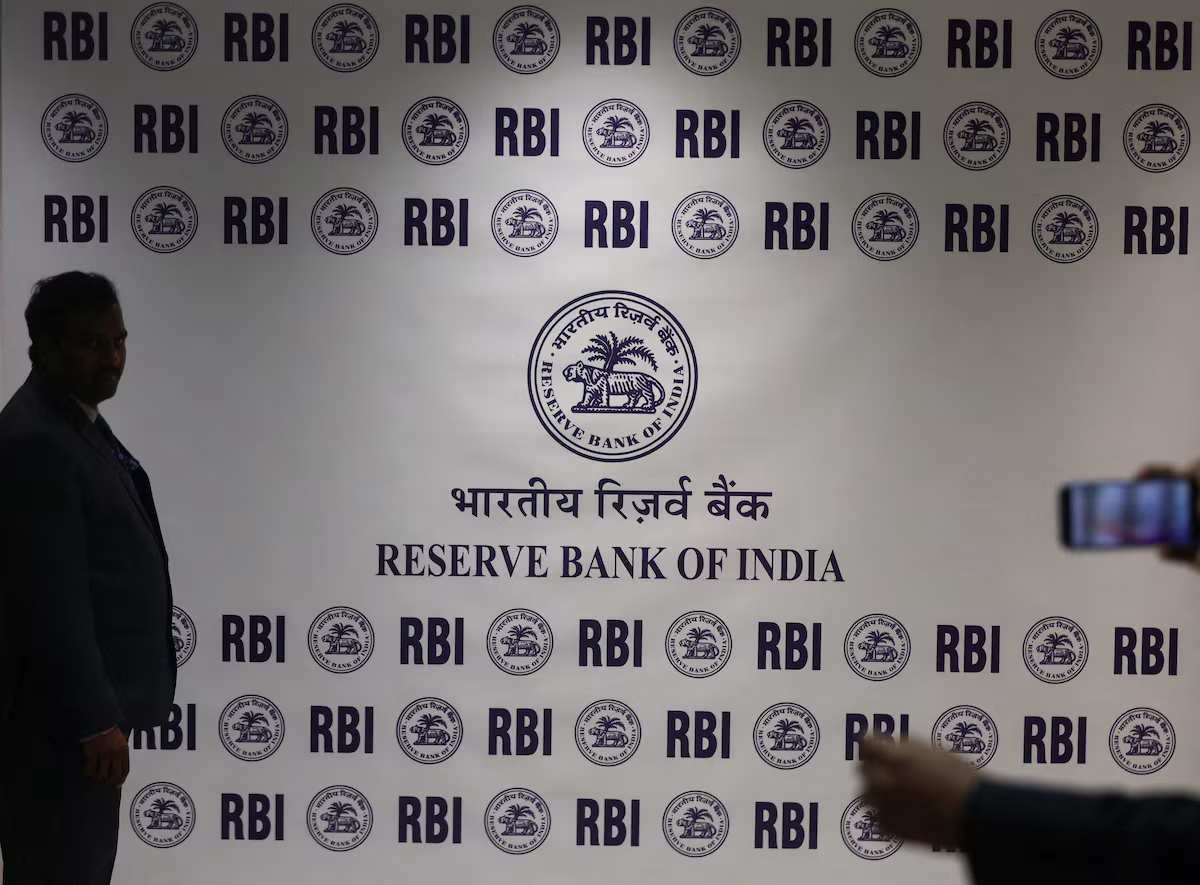
A man stands in front of the Reserve Bank of India (RBI) logo inside its headquarters in Mumbai, India, February 6, 2026. REUTERS
BENGALURU, April 10 (Reuters) – India’s central bank on Friday proposed classifying non-banking lenders with assets of 1 trillion rupees ($10.78 billion) or more as upper layer non-banking financial companies (NBFCs), a category comprising the largest and most systemically important players in the sector.
- The Reserve Bank of India issued draft rules on how to identify upper layer NBFCs, with an aim to make the process more transparent and simpler
- Upper layer NBFCs are the biggest and most systemically important non-bank lenders, whose failure could pose risks to the broader financial system, and are therefore subject to stricter regulatory oversight
- The RBI also proposed to consider eligible government-owned NBFCs for inclusion in the list of upper layer NBFCs, which could earlier only be classified as base or middle layer NBFCs
- Earlier, upper layer NBFCs were identified based on the top 10 by size and a risk-based scoring method
- The RBI proposed that the criteria for identification of upper layer NBFCs will be reviewed periodically, with the asset size threshold to be reviewed every five years
- RBI has sought comments from the public and other stakeholders by May 4
($1 = 92.7970 Indian rupees)
Reporting by Nishit Navin; Editing by Devika Syamnath