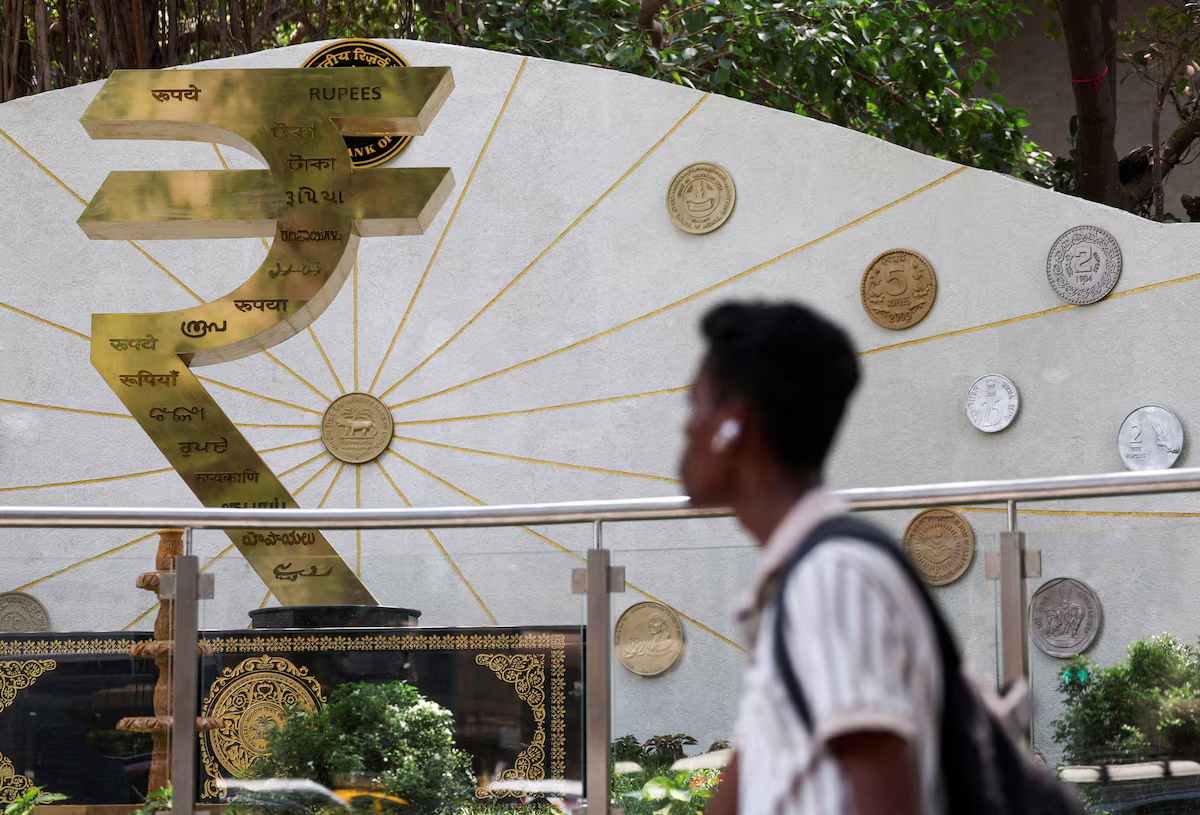
A man walks past an installation of the Rupee logo and Indian currency coins outside the Reserve Bank of India (RBI) headquarters in Mumbai, India, April 9, 2025. REUTERS
MUMBAI, Feb 2 (Reuters) – A searing rally in gold combined with FX swaps undertaken to boost domestic liquidity have pushed India’s foreign exchange reserves to an all-time high, bolstering the central bank’s ability to manage rupee volatility amid capital outflows and U.S. trade tensions.
FX reserves rose to $709 billion in the week through January 23, according to data released on Friday, rising $8 billion week-on-week, with about 70% of the increase attributed to the higher value of gold holdings.
WHY IT’S IMPORTANT
FX reserves are a key component of maintaining comfort on external stability metrics for an economy, especially for a country like India that runs a current account deficit.
The reserves are closely monitored during periods of currency stress. The rupee has been under pressure for the past few months, slipping to a lifetime low of 91.9850 on Friday.
BY THE NUMBERS
Since steep U.S. tariffs took effect in last August, the rupee has weakened roughly 5%, a move exacerbated by equity outflows that may have been partly driven by the tariffs.
Yet, India’s FX reserves have risen by about $25 billion in that period, despite frequent central bank intervention aimed at ensuring the rupee’s depreciation remains orderly.
The Reserve Bank of India’s use of buy/sell USD-INR swaps, which offset the liquidity drain from spot dollar sales, has softened the impact of intervention on headline reserve levels.
The price of gold, meanwhile, has hit a string of record highs over recent weeks.
CONTEXT
The Indian central bank held about 28.3 million troy ounces of gold as part of its FX reserves at the end of December, and has been routinely conducting USD-INR buy/sell swaps on a to manage the liquidity impact of its spot dollar sales to support the rupee.
Since late 2025, the RBI has conducted swaps worth at least $25 billion. Another $10 billion swap auction is scheduled for Wednesday.
Concentrated largely in the three-year bucket, the buy/sell swaps involve the central bank mopping up dollars from the banking system in the first leg of the transaction, which feeds into the headline reserve number.
GRAPHIC

KEY QUOTES:
A combination of increased gold prices and the RBI’s buy/sell swap operations has contributed to the changes in FX reserve numbers, said Madan Sabanvis, chief economist at Bank of Baroda.
The RBI has been actively using FX swaps to manage banking system liquidity; and they mature, the reserves are likely to reduce by a corresponding amount, he added.
Reporting by Jaspreet Kalra; Editing by Sonia Cheema