
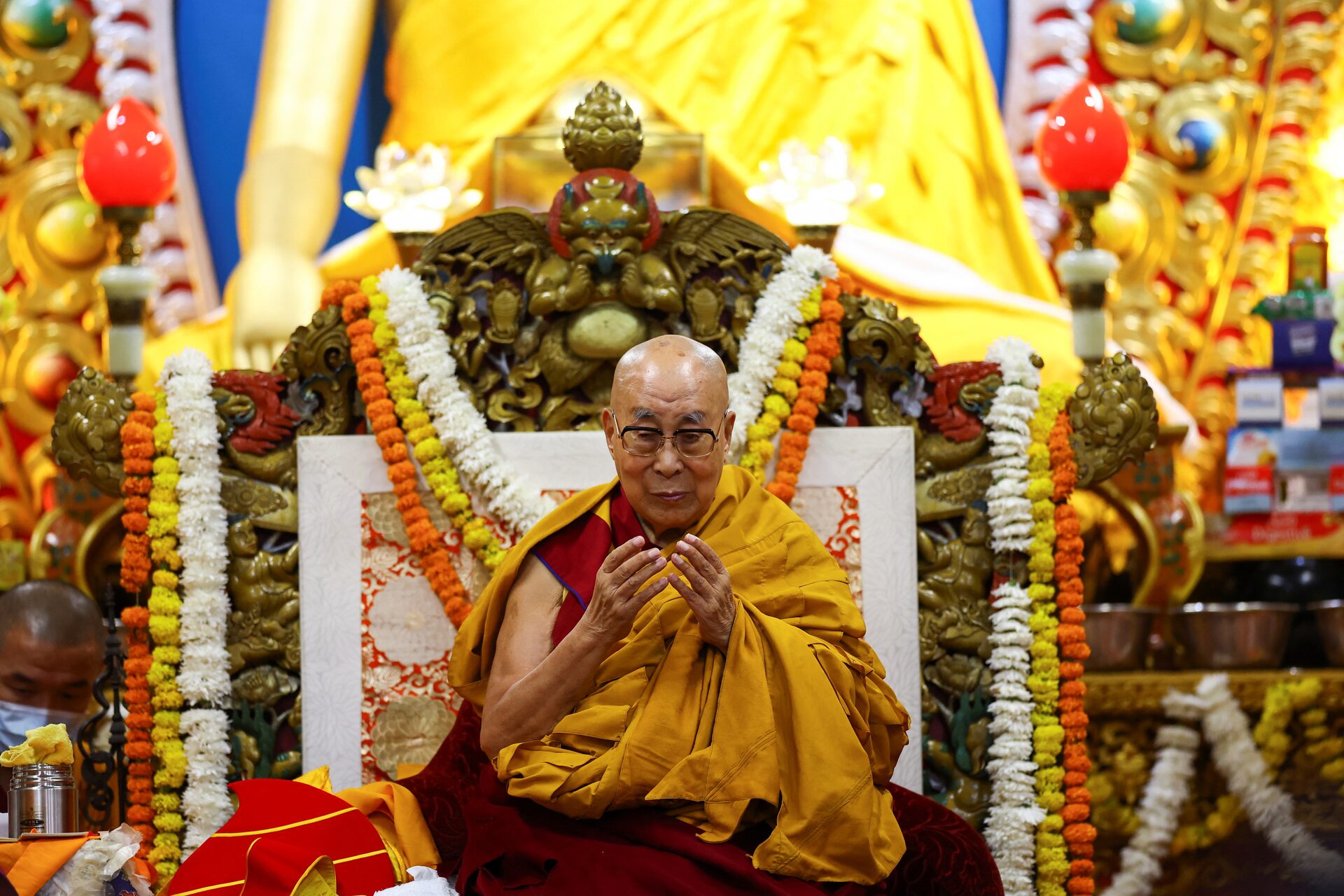
Tibetan spiritual leader the Dalai Lama attends a prayer meet held for his long life at the Dalai Lama temple in the northern hill town of Dharamshala, India, July 5, 2025. REUTERS
HONG KONG, March 27 (Reuters) – China said in a statement late on Thursday that it strongly opposed the Czech Senate passing a draft resolution on the Dalai Lama’s succession, stating that it “grossly interfered” with China’s internal affairs.
The Czech Senate passed the resolution on March 25, around two weeks after China approved a law on a “shared” national identity among the country’s 55 ethnic minority groups, including Tibetans.
The resolution specifically recommends the Czech government, including the Ministry of Foreign Affairs, support the Tibetan people’s free choice of the 15th Dalai Lama.
The Chinese embassy in the Czech Republic said it expressed “strong dissatisfaction and firm opposition to the fact that certain Czech parliamentarians disregarded China’s solemn position on Tibet-related issues and grossly interfered in China’s internal affairs.”
Tibet is an “inseparable part of Chinese territory, and Tibetan affairs are purely China’s internal affairs,” it said.
China said the 14th Dalai Lama was “not simply a religious figure, but a political exile who engages in anti-China separatist activities under the guise of religion.”
Beijing was angered last July after Czech President Petr Pavel met the Tibetan spiritual leader in India. A group from the Czech parliament also travelled to Dharamshala in December and met the Dalai Lama.
The Communist Party established the Tibet Autonomous Region in September 1965, six years after the 14th Dalai Lama fled into exile in India in the wake of a failed uprising.
Since Xi Jinping became president in early 2013, China has deepened its institutional control in Tibet – from requiring Tibetan Buddhism to be guided by the Chinese socialist system to demanding its people “follow the party”. It has said it also has the final say over his successor, rejecting the Dalai Lama’s assertion that a non-profit institution set up by him would have the sole authority to do so.
Thursday’s embassy statement said China was “a unified multi-ethnic country where all ethnic groups maintain equal, united, mutually supportive, and harmonious relations.”
The aim of the recently passed unity law, it said, was to promote national unity and progress and prohibit acts that undermine national unity and create national division.
“Currently, Tibet’s economy is booming, society is harmonious and stable, people’s lives are constantly improving,” it said.
Reporting by Farah Master and the Beijing newsroom; Editing by Kate Mayberry