

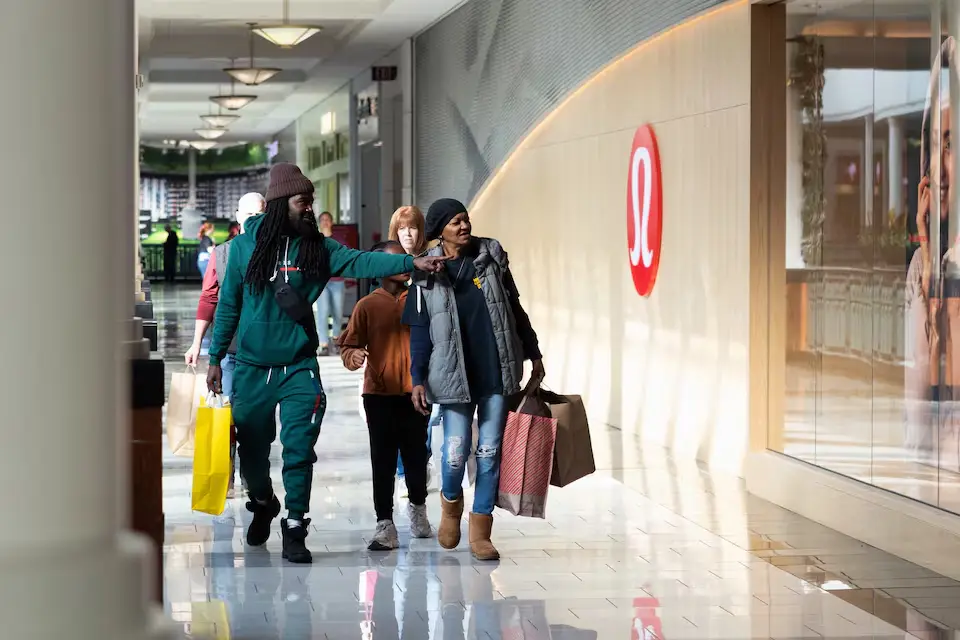
LOS ANGELES, Nov 24 (Reuters) – US mall owners and retailers are betting they can draw online shoppers with an experience they can’t get from their screens: a festive day out.
Restaurants, entertainment and shared experiences are becoming increasingly important to draw shoppers to malls, surveys show, pushing brands to offer in-store deals and revamp their outlets to make the trip worthwhile.
Some 84% of Americans planning to shop over Thanksgiving weekend expect to do so in a physical store, the highest share since 2019, according to a survey by the International Council of Shopping Centers. And about 55% of US holiday shoppers plan to visit an indoor mall this season, up from roughly 50% last year, according to a separate consumer survey by real estate investment company JLL.
Brian Daniel, 55, of Grand Rapids, Michigan, said most of his shopping shifted online after the pandemic, but he has recently returned to malls, drawn partly by the experience of shopping in person.

“When I go to the mall, I’m not just in and out. I make it an evening. Shopping, dining, and a movie,” Daniel said. During the holidays, he said, the music, decorations and ability to browse for gifts add to the appeal.
Refreshments are increasingly part of the shopping trip, with about 21% of respondents to JLL’s survey expecting to buy a drink or food on every trip this holiday season, up from 12% last year.
“(Shoppers are) gravitating towards malls because of the depth and breadth of opportunities to shop,” said Paul Chase, president of lifestyle property management at JLL. “It’s important to customers or shoppers that they’re going to go where they get … the best experience.”
Consumers heading for the mall expect to spend $1,357 per head during the holiday season, about 23% more than the amount budgeted by those who do not plan to visit malls, the JLL survey showed.
Shoppers expect to spend 17.3% more on dining and entertainment and 16% more on food and decorations than in the past holiday season, while planned spending on gifts is up just 3.1%, the survey showed.
THE NEW MALLRATS
Younger consumers are helping drive the shift, increasingly treating malls as a place to socialize rather than simply shop, Simon Property Group (SPG.N), opens new tab CEO Eli Simon told a real estate conference in September.
Shoppers also “want to go where the best restaurants are; they want to go where the entertainment is,” said Stephen Yalof, CEO of Tanger, which owns 42 shopping centers across the US and Canada, most of them outlet centers.
To lure shoppers, retailers are bolstering their in-store mall assortments while offering new experiences.
Coach (TPR.N), opens new tab, for example, is for the first time selling its Tabby and New York collection handbags across its outlet stores. In prior years, shoppers could only find these bags, which typically cost hundreds of dollars, in Coach’s full-price retail stores.
“We’re providing access to these items wherever our customer chooses to shop. That’s new,” said Leigh Manheim Levine, president of Coach North America. The brand realized that Gen Z shoppers “were very confused when they saw Tabby on TikTok but they didn’t see it in the store,” she said.
Coach has also been “fast and furiously” opening in-store cafés, Levine said. In the past two months, it has doubled the number of Coach Coffee Shops in North America to eight locations — mostly in outlet malls with limited food and beverage options.
“Customers have so many choices today, so we have to keep earning their visits by offering something they can’t get online,” said Nata Dvir, chief merchandising officer at department store chain Macy’s (M.N), opens new tab. She pointed to an on-site Levi’s tailoring pop-up and a custom Ralph Lauren embroidery station.