

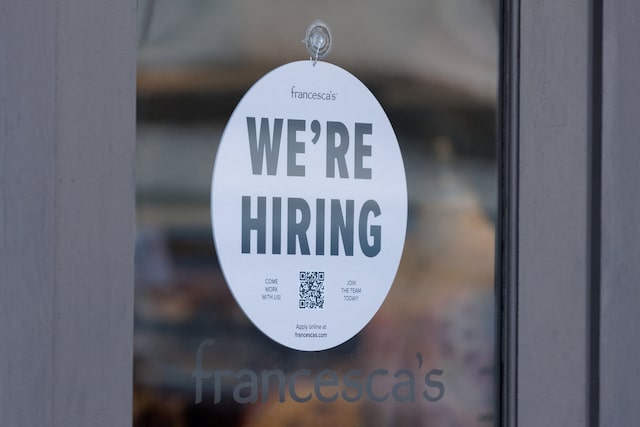
WASHINGTON, Nov 6 (Reuters) – US nonfarm payrolls likely picked up in October, but an anticipated slowdown in annual wage growth to below 3.0% for the first time in nearly 5-1/2 years would reinforce the view that the labor market was not a source of inflation.
The Labor Department’s closely watched employment report on Friday is also expected to show the unemployment rate unchanged at 4.2% last month, with a high probability it may have slipped to 4.1%. Historically low layoffs and a recent jump in job openings have raised the prospect of labor market tightening.
But economists and Federal Reserve officials have maintained that the labor market poses no inflation risk. Some economists have argued that a shrinking supply of workers amid an immigration crackdown and retirements is the primary driver of the relatively low unemployment rate.
“We have got a jobs market which isn’t generating wage growth in any meaningful way. That really should help to dampen medium-term price pressures because the biggest cost input for corporate America is labor,” said James Knightley, chief international economist at ING. “Weak wage growth should the give Fed some confidence that over the medium term, inflation will continue trending towards target.”

Nonfarm payrolls likely increased by 65,000 jobs last month, a Reuters survey of economists predicted, after being restricted to a 29,000 gain in September because of a calendar quirk related to a late Labor Day holiday. Estimates ranged from 35,000 to 125,000 jobs.
October payrolls could also miss expectations, with some economists noting seasonal factors, used by the government to strip out seasonal fluctuations from the data, were unfavorable for the month.
Employment gains have averaged 68,000 jobs per month this year. Economists say the economy needs to create at least 40,000 per month to keep up with growth in the working-age population. The so-called breakeven rate has declined from roughly 150,000 in 2024 because of the smaller labor force.
Payroll gains have lagged economic growth, with gross domestic product increasing at a 3.4% annualized rate in the third quarter, fueled by strong consumer spending and businesses aggressively investing in artificial intelligence. Economists said employers likely overhired after the COVID pandemic, and some businesses were probably uncertain about their staffing needs as they incorporated AI into their operations.
The tech-heavy index is now in correction territory, having lost nearly 12% from its record close roughly one month ago.
They said uncertainty stemming from the US-Israel war with Iran, which has raised energy prices, was also making employers hesitant to increase headcount. Limited opportunities have made job hopping harder, curbing wage growth.
LIMITED OPPORTUNITIES FOR JOBSEEKERS
It is also difficult for young adults, recent college graduates and some unemployed people to find work.
Disenchantment over the economy as well as anger over the Middle East conflict, now in its ninth month, cost President Donald Trump’s Republican Party control of Congress, with Democrats performing strongly in this week’s midterm elections.
“Job security remains elevated for workers already employed, while opportunities for job seekers and job switchers have become more limited,” said Gregory Daco, chief economist at EY-Parthenon. “More broadly, the economy has shifted toward a job-light expansion, as investment tilts toward technology and firms increasingly meet solid demand by relying more on their existing workforce, as reflected in firmer hours worked.”
Average hourly earnings are forecast to have increased 0.3% in October after edging up 0.1% in September. Wages are expected to have advanced 2.9% in the 12 months through October. That would be the first year-on-year increase below 3% since May 2021 and a slowdown from a 3.0% gain in September.
While that would highlight the disinflationary impulse from the labor market, it would illustrate the further erosion of household incomes, already pressured by inflation.
Income at the disposal of households after adjusting for inflation and taxes fell in September.
Economists expect consumer spending and the broader economy will slow down in the fourth quarter and into 2027. They continued to expect the US central bank to raise interest rates in December, though some believed benign wage pressure could limit the number of rate hikes next year. The Fed last week left its benchmark overnight interest rate in the 3.75%-4.00% range while acknowledging that inflation “remains elevated.”
Next Tuesday’s consumer inflation report for October could offer more clues on the course of monetary policy in early 2027.
“The labor market is not too hot, not too cold,” said Stephen Stanley, chief US economist at Santander US Capital Markets. “So, the Fed has nothing to worry about when it comes to the labor situation.”
Reporting by Lucia Mutikani; Editing by Andrea Ricci