

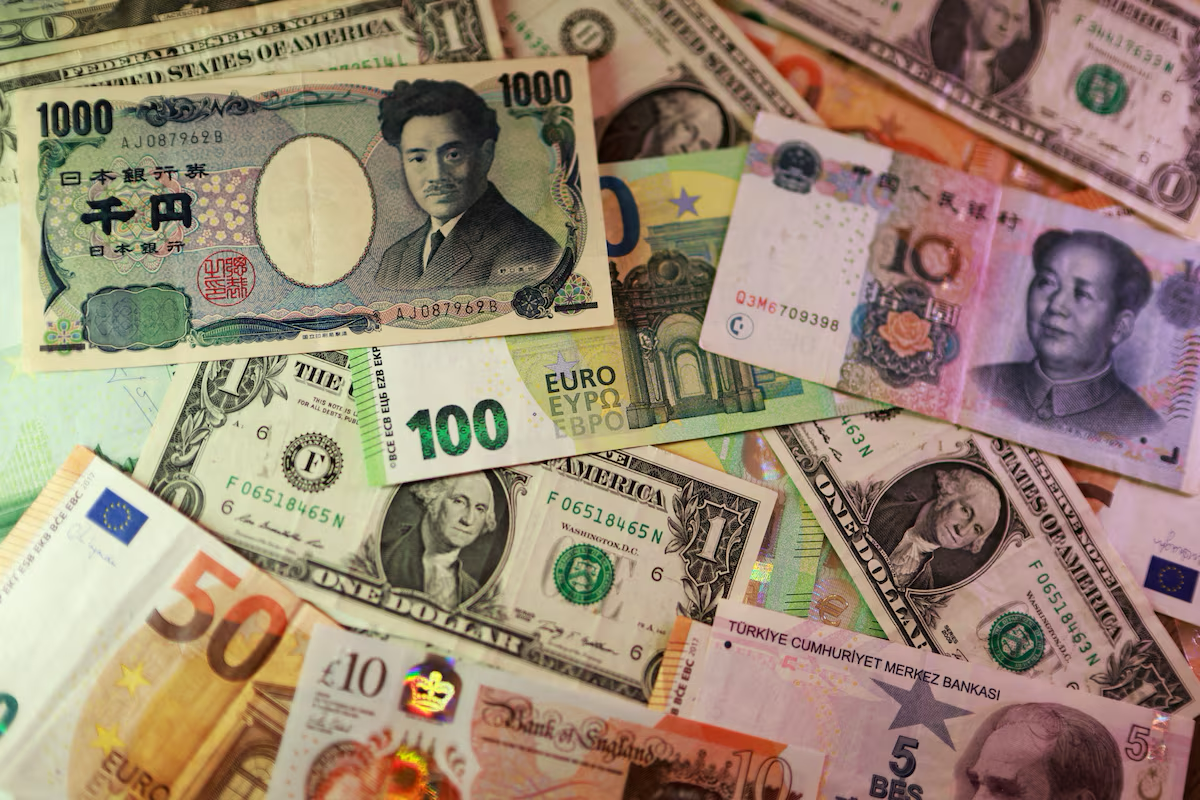
U.S. dollar, Euro, Yen, Pound, Turkish Lira, Yuan banknotes are seen in this illustration taken March 24, 2026. REUTERS
TOKYO, Sept 1 (Reuters) – Japan’s benchmark 10-year bond yield struck the key 3% barrier for the first time since 1996 on Tuesday, amid a deepening global debt selloff as traders fret about oil-driven inflation, monetary tightening and worsening fiscal conditions.
With the Middle East crisis stoking price pressures globally, yields have been spiking from Tokyo and Sydney to New York and London as investors anticipate the need for central banks to raise interest rates.
The bond market is also under pressure from a deluge of issuance as hyperscalers aggressively raise money to fund the AI boom, in an environment where the U.S. debt load has passed $40 trillion and Japan’s ministries are likely to request a record amount in an initial budget for next fiscal year. Yields rise when bond prices fall.

The sharp rise in yields creates a conundrum for policymakers with markets now extremely sensitive about perceptions of fiscal profligacy.
For Japan in particular, it increases the cost of servicing the developed world’s biggest debt pile at a time when Prime Minister Sanae Takaichi is planning aggressive investment.
“Investors are increasingly demanding greater compensation to own duration as sovereign issuance and corporate funding needs compete for the same pool of capital,” said Masahiko Loo, senior fixed income strategist at State Street Investment Management in Tokyo.
“Bond investors are less worried about growth and increasingly focused on inflation and supply.”
The 10-year Japanese government bond yield reached 3% for the first time since September 1996, while the five-year rate hit a record high 2.26% and the two-year yield notched a 31-year peak at 1.795%.
U.S. 10-year Treasury yields also pushed to the highest since January of last year at 4.786% in Tokyo trading hours.
Australian 10-year yields notched their sharpest rise in five months, with traders attributing part of that to the market’s sensitivity to Japanese demand amid speculation higher local yields mean fewer Japanese buyers of Australian debt.
European yields also climbed in early trading on Tuesday, with Germany’s 10-year yield, the benchmark for the euro zone at 3.34% its highest since 2011.
‘REGIME CHANGE’
Seen as a psychologically significant threshold, the rise in the 10-year yield to 3%, a fresh three-decade peak, could prompt investors to rethink how they see Japanese government debt, long considered a stable global benchmark.
“A further rise in JGB yields would make carry trades less attractive and could drive a gradual re-allocation into Japanese assets,” said Prashant Newnaha, senior rates strategist at TD Securities in Singapore.
“It’s a genuine regime change. JGBs were the anchor for global fixed income for a long time. Now it has flipped.”
Traders have cemented bets for the Bank of Japan to raise rates at its meeting this month, with comments from policymakers sounding increasingly hawkish over recent weeks, while U.S. Treasury Secretary Scott Bessent has also ramped up pressure by urging the Japanese central bank to tighten policy.
The U.S. Federal Reserve is also primed for near-term tightening after Chair Kevin Warsh struck a decidedly hawkish posture at the annual Jackson Hole symposium.
“All global yields selling off are partly reflecting the sell-off in the key, most-watched markets,” including the U.S. and Japan, said Andrew Lilley, chief rates strategist at Barrenjoey in Sydney.
“I think really most of this sell-off has been a re-assessment of Fed policy,” amid some market concern that central banks may already be behind the curve on tightening, he added.
“You don’t want to be in a state where if you don’t deliver a tightening, the market delivers half of one for you, because they think that you’re running a big risk.”
Reporting by Kevin Buckland; Additional reporting by Alun John; Editing by Sam Holmes
