
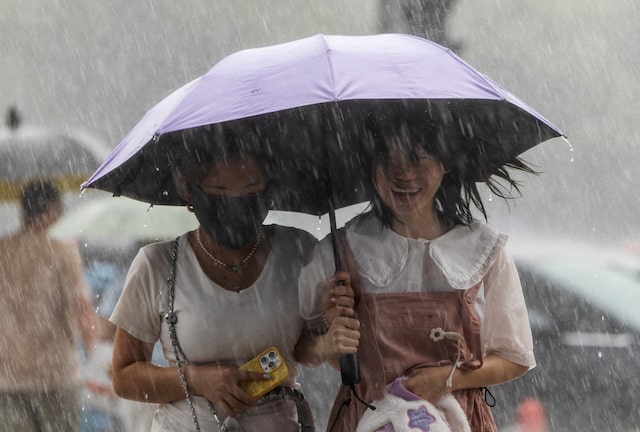
HONG KONG, July 22 (Reuters) – China has entered its peak flood control period, weather experts said, with extreme rainfall set to increase in frequency and intensity from late July to early August, with much of northern China set to experience 20% to 50% more rainfall than usual.
Rising temperatures are shifting the rain belt westward and northward across the country, expanding the area of humid and semi-humid climate zones and increasing the risk of secondary disasters, which are exacerbated by factors such as urbanisation and infrastructure construction.
“Climate change is no longer a future problem for China – it’s already happening,” said Xuebin Zhang, a professor at the University of Victoria in Canada and director of the Pacific Climate Impacts Consortium.
Adaptation needs to become a larger part of the response, Zhang said.
Swaths of China have experienced downpours in recent weeks. After torrential rain, part of a mountainside collapsed on Friday in Pengshui County – an area famed for its scenic nature roughly 270 kilometres (167 miles) away from downtown Chongqing city in the southwest.
At least eight people died in the landslide and rescue teams continue to search for as many as 34 people.
The National Climate Centre said that during the critical flood season from mid-July to mid-August, known as Qixia Bashang, most parts of northern China, eastern Inner Mongolia and northeastern China will experience above-average rainfall.
“Many areas in the Beijing-Tianjin-Hebei region will see 20% to 50% more rainfall than usual,” the climate centre said.
Vigilance is needed to guard against floods caused by heavy rain, it said.
Portions of Liaoning province in the northeast have already received more than twice their normal rainfall this year.
Some areas could experience extreme downpours capable of triggering flash floods, urban waterlogging and landslides, the climate centre said.
Reporting by Farah Master and the Beijing newsroom; Editing by Christopher Cushing.