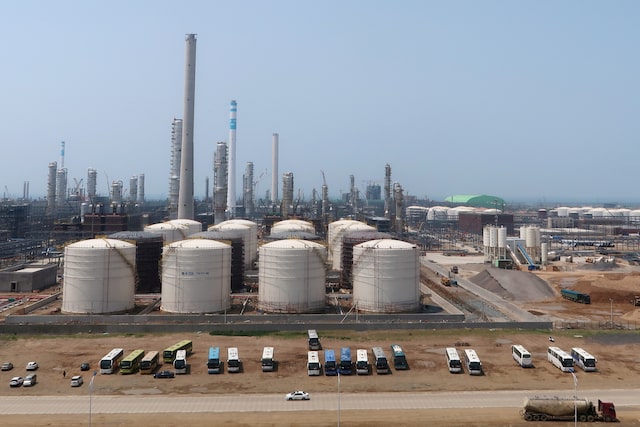
SINGAPORE, July 2 (Reuters) – China’s Hengli Petrochemical, sanctioned by the U.S. for allegedly buying Iranian oil, has cancelled recent purchases of non-Iranian crude, five trade sources said, forcing the firm to cut refinery operations further as inventory runs low.
The unusual cancellations come just weeks after Reuters reported that the refiner bought cargoes from West Africa and the Middle East, aiming to be removed from Washington’s list.
The refiner cancelled deals for at least 6 million barrels of crude, said three of the sources who were briefed on the matter.
These included 2 million barrels of West African oil delivered to storage tanks in east China last month that are owned by a third party, as well as another two 2-million-barrel Middle Eastern crude cargoes scheduled to be delivered in July, they said.
One of the Middle Eastern cargoes has been resold, according to one of the sources. All sources spoke on condition of anonymity as the matter is sensitive.
The reason for the cancellations — which have not previously been reported — was unclear.
Hengli, one of China’s largest independent refiners, did not respond to emails seeking comment and calls to company officials did not connect.
The U.S. imposed sanctions on the refinery in April. Shortly after that, Hengli denied it had had any dealings with Iran.
Last week, Washington lifted sanctions on Iranian oil for 60 days as part of an interim peace deal and Iran has accelerated oil loadings, but it remains unclear who might be buying under the new waiver.
CANCELLATIONS ARE RARE
It is rare for large refiners to cancel deals on short notice or default on them, traders said, adding that the cancellations could cast a pall over future transactions and partnerships.
“This is a blow to its trading team as they tried so hard, knocking at doors at many (partners) to get back the mainstream market,” said one of the sources who is among the suppliers.
Hengli had structured each purchase via a supply chain involving several traders to minimise any potential sanction backlash for the parties, the sources said.
One of the sources said this made it hard to tell which firms suffered losses. It was also unclear whether Hengli compensated the sellers.
The refiner said in late April that its 400,000-barrel-per-day plant in northeast China was holding more than three months’ worth of crude oil stocks, and that it would seek a legal path to being removed from the sanctions list.
Unable to buy non-sanctioned oil to replenish its inventory, Hengli has had to further cut its refining throughput, two of the sources said.
It shut one of its two 200,000-bpd crude distillation units in late June, reducing the refinery’s operating rate to 50%, according to one of the two sources and a separate source.
The refinery was operating at around 70% of its capacity earlier in June and at more than 80% in May, Reuters has reported.
Reporting by Chen Aizhu and Trixie Yap; Editing by Florence Tan and Edwina Gibbs.