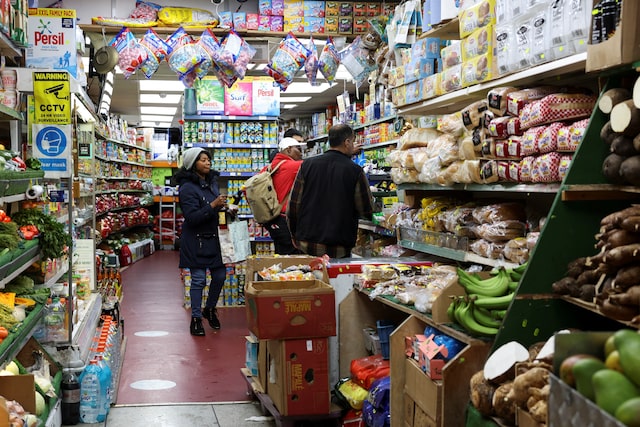
LONDON, June 17 (Reuters) – British inflation unexpectedly held at 2.8% for May, unchanged from the 13-month low reached in April, official figures showed on Wednesday, a day before the Bank of England will announce its next interest rate decision.
Sterling weakened slightly after the data. Economists polled by Reuters had forecast a rise to 3.0% for May, as the U.S.-Iran war keeps British inflation almost a percentage point higher than the BoE had forecast in January.
Inflation has been above the BoE’s 2% target for most of the past five years, and in April the BoE said it was likely to rise above 3.5% by the end of the year, and potentially exceed 6% early next year under the most adverse of three scenarios.
However, financial markets this week have drawn comfort from an apparent deal between the U.S. and Iran which promises to reopen the Strait of Hormuz, a major corridor for oil exports and is due to be signed in Switzerland on Friday.
Britain has been more affected than most Western countries by the conflict due to its reliance on imported natural gas.
Economists polled by Reuters expect the BoE’s Monetary Policy Committee to vote 7-2 to keep rates on hold at 3.75%.
While Governor Andrew Bailey says the BoE has time to wait to assess the impact of the conflict, some policymakers worry businesses will use it to raise prices more broadly, or that it could dent households’ confidence in the BoE inflation target.
Services price inflation – which the BoE views as a guide to underlying price pressures – rose to 3.7% in May from 3.2% in April, in line with economists’ forecasts.
Core inflation, which excludes food, energy, alcohol and tobacco prices, rose slightly less than expected to 2.6% from 2.5%.
Reporting by David Milliken.