
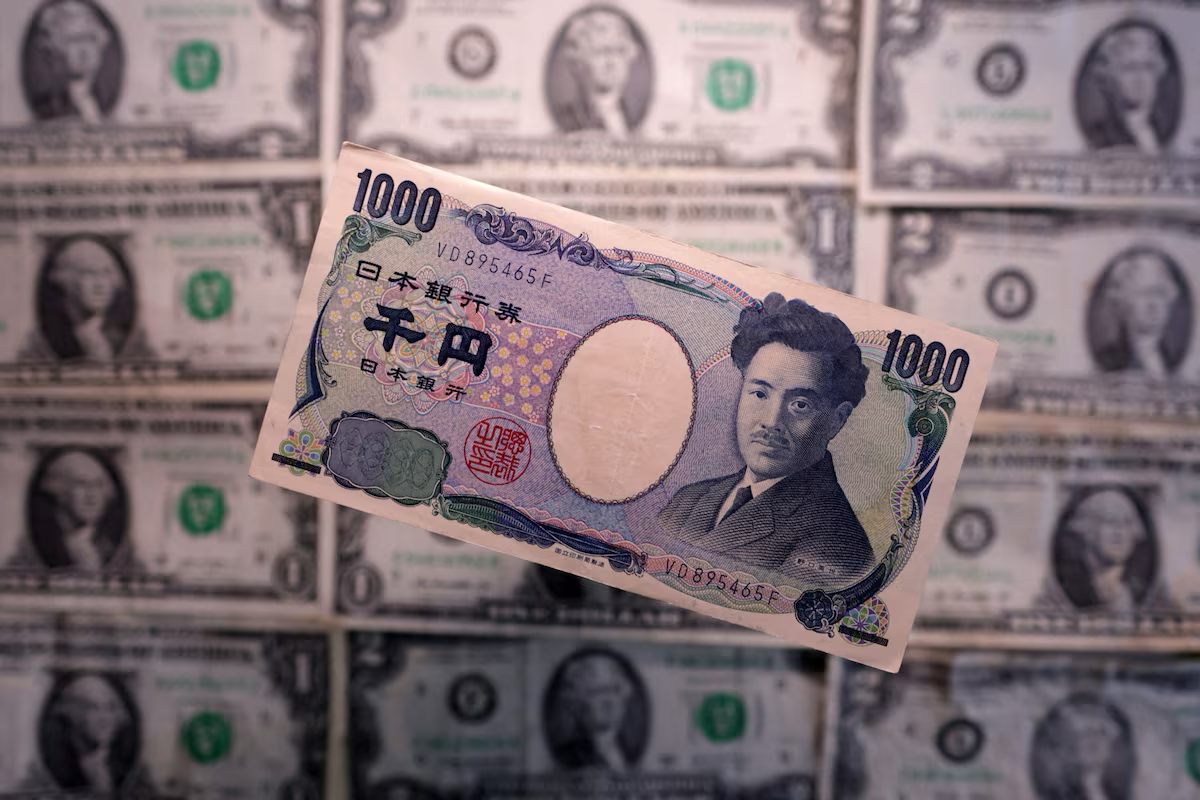
Yen and U.S. dollar banknotes are seen in this illustration taken March 19, 2025. REUTERS
TOKYO, May 27 (Reuters) – The yen hovered close to its May low versus the U.S. dollar on Wednesday, near levels that spurred Japanese currency intervention in recent weeks, as traders weighed the risks of a renewed flare-up in the Iran war.
The Australian dollar erased earlier gains against the greenback following cooler-than-expected inflation data.
The New Zealand dollar gained after the Reserve Bank’s policy committee signalled that interest rate hikes would likely be necessary in the coming months, after leaving policy steady as had been widely predicted.
The safe-haven U.S. dollar was steady after edging higher against major peers a day earlier, as U.S. strikes on Iran dented optimism for a near-term end to hostilities and a reopening of the crucial Strait of Hormuz shipping channel.
U.S. Secretary of State Marco Rubio said that negotiating a deal to halt the conflict could “take a few days.”
The yen crept up slightly to 159.28 per dollar on Wednesday, but remained close to the 160 level that many market participants view as a red line for intervention to support it.
Bank of Japan Governor Kazuo Ueda struck a somewhat hawkish posture on Wednesday, saying the war-driven oil shock could become persistent in an environment of high inflation expectations and rising wages.
Markets currently lay around 68% odds for a quarter-point hike at the BOJ’s next policy meeting on June 15 to 16, according to LSEG data.
“While the threat of further intervention and growing bets in favour of a June hike from the Bank of Japan should be supporting the yen, Japan’s high exposure to the energy crisis is keeping the currency under pressure,” and Friday’s Tokyo consumer price data will be closely watched, said Matthew Ryan, head of market strategy at Ebury.
“We doubt that anything will derail a June hike from the BOJ at this stage, although a soft set of figures here could ease bets for tightening beyond then.”
The dollar index , which measures the currency against the yen and five other rivals, was little changed at 99.11 after adding 0.15% on Tuesday.
The euro gained slightly to $1.1637.
The Aussie slipped 0.09% to $0.7160, reversing an earlier gain, after data showed the annual inflation rate cooled to 4.2% in April, compared with 4.6% in March and analysts’ forecasts of 4.4%.
New Zealand’s dollar jumped 0.6% to $0.5873.
Reporting by Kevin Buckland; Editing by Sonali Paul