
India’s commitment to Elephant Conservation is not merely a Policy Choice, but a Reflection of Civilizational Values and Ecological Responsibility: MoS (EFCC), Shri Kirti Vardhan Singh
‘Conflict to Coexistence’ is the motto of the State Government in addressing the Human-Elephant Conflict cases: Dy. CM (Andhra Pradesh), Shri K. Pawan Kalyan
MoS (EFCC) chaired 23rd Steering Committee Meeting of Project Elephant; Workshop on ‘Human–Elephant Conflict: varying scenarios Across India’ organised
Regional Action Plan for Comprehensive Understanding and Management of Human–Elephant Conflict in Southern India released
Union Minister of State for Environment, Forest and Climate Change (MoS, EFCC), Shri Kirti Vardhan Singh, presided over the national celebrations of World Elephant Day 2026 at Visakhapatnam today. Shri Konidala Pawan Kalyan, Deputy Chief Minister (Andhra Pradesh), graced the occasion as the Guest of Honour. The event saw participation of Shri Tanmay Kumar, Secretary (EFCC), Shri Sushil Kumar Awasthi, DG (Forest) and Special Secretary; Shri Ramesh Pandey, ADG (Wildlife), besides senior officers of the Ministry, and Andhra Pradesh Forest Department. Officers from the Ministry of Railways, State Forest Departments, scientific institutions and other stakeholders were also present during the event.
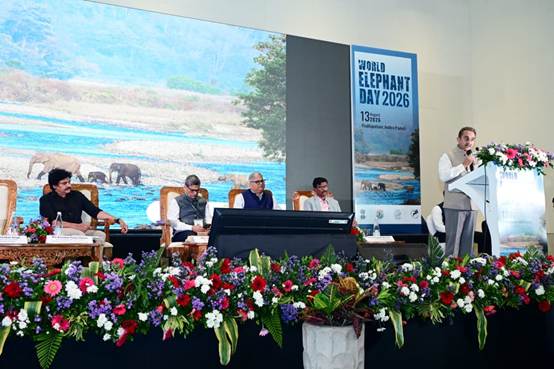
Addressing the gathering, Shri Kirti Vardhan Singh stated that under the leadership of Prime Minister Shri Narendra Modi, India is pioneering a sustainable future for elephants by combining cutting-edge technologies like AI, remote sensing and geospatial mapping with traditional knowledge to protect their habitats. He further underlined the need for cross-sectoral engagement, community participation and scientific approaches to reduce Human–Elephant Conflict (HEC) while ensuring the well-being of local communities.
Shri Singh stated that India’s commitment to elephant conservation is not merely a policy choice, but a reflection of our civilizational values and ecological responsibility. He highlighted that with 33 Elephant Reserves, 150 scientifically identified elephant corridors and nearly 60% of the world’s wild Asian elephant population, India continues to play a leading role in elephant conservation. HEC is a complex issue and it requires a coordinated solution by including various stakeholders and utilising scientific data after its ground-level validation, the Minister added.
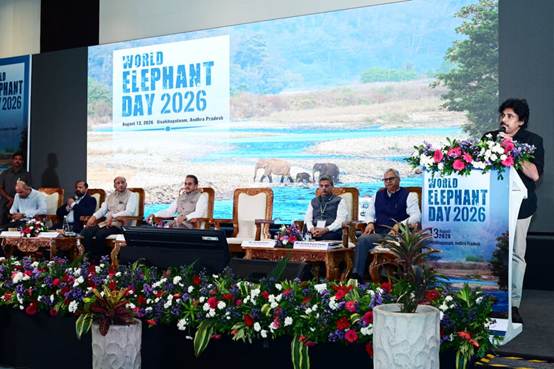
Delivering the keynote address, Shri Konidala Pawan Kalyan, Deputy Chief Minister (Andhra Pradesh), informed that ‘Conflict to Coexistence’ is the motto of the State Government in addressing the HEC cases, considering it as a shared responsibility beyond States’ administrative boundaries. He also talked about the H.A.N.U.M.A.N. (Healing And Nurturing Units for Monitoring, Aid and Nursing of Wildlife) initiative of the Andhra Pradesh Government and how the State Government is using modern technology and engaging with local communities, besides capacity building of frontline forest staff in protecting wildlife in the State.

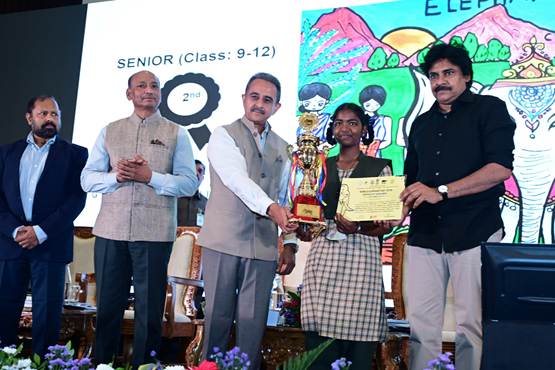
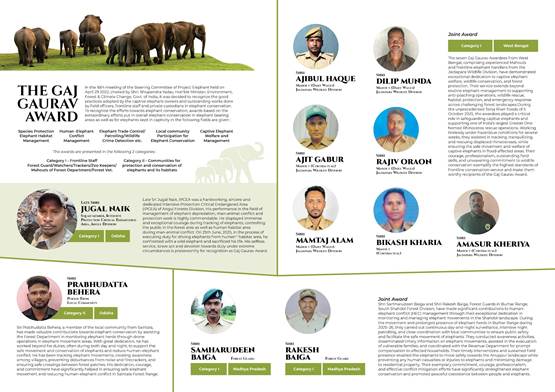
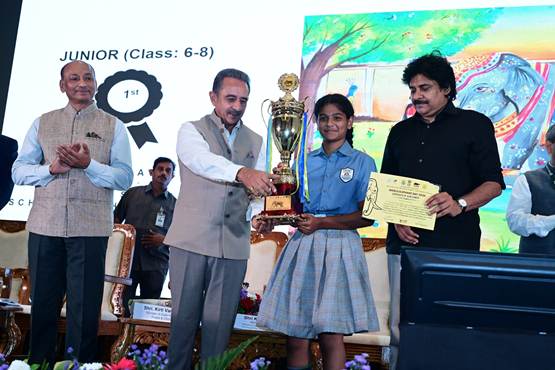
As part of the national celebrations, Shri Kirti Vardhan Singh conferred Gaj Gaurav Awards 2026 to individuals for their exemplary contributions to elephant conservation and management.
A key highlight of the event was the release of 30 Giant Steps, highlighting 30 major milestones, achievements and conservation initiatives undertaken under Project Elephant during 2020–2026. Launched in 1992 as a Centrally Sponsored Scheme, Project Elephant has completed more than three decades of dedicated efforts towards protecting elephants, their habitats and corridors, addressing HEC and ensuring the welfare of captive elephants.
Another significant release was the Regional Action Plan for Comprehensive Understanding and Management of Human–Elephant Conflict in Southern India (Karnataka, Keralam, Andhra Pradesh, Tamil Nadu). Prepared under the Project Elephant in consultation with the Southern elephant range States, scientific institutions and subject experts, the Plan adopts a landscape-level approach to address HEC across the region. The Plan, with a support of Rs. 500 crores from the Government of India, focuses on habitat connectivity, corridor conservation, early-warning systems, conflict mitigation infrastructure, habitat restoration, community participation, research and monitoring, rapid response mechanisms, capacity building and strengthened interstate coordination.
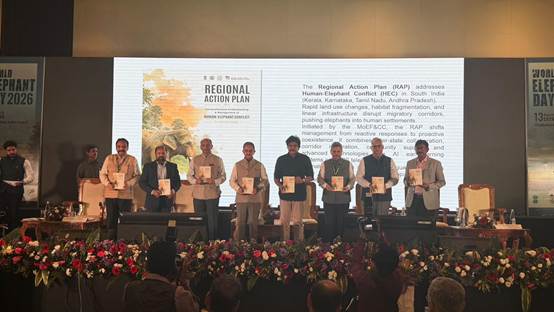
The event also marked the release of a Special Issue of the Journal of Wildlife Science commemorating three decades of elephant conservation in India. The Special Issue brings together scientific knowledge and research generated over the past three decades to support future management and conservation of elephants under Project Elephant. The monograph, ‘Asian Elephants in Central India Before 1947’, was also released, providing an important historical account of elephant distribution, status and the human–elephant interface in Central India.
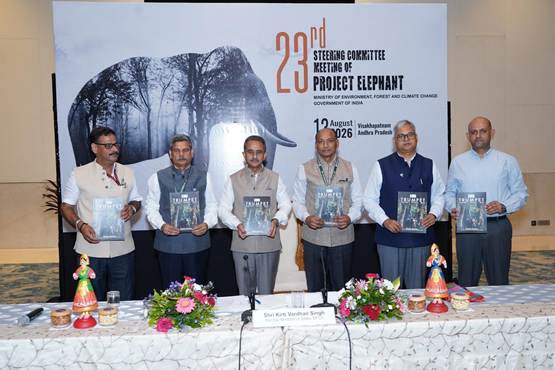
The 23rd Steering Committee Meeting of Project Elephant, chaired by Shri Kirti Vardhan Singh, was also held at Visakhapatnam. The meeting deliberated on current issues in elephant conservation and management and witnessed the release of key initiatives and publications, including The Trumpet, Volume VI Issue 01; the Model Elephant Conservation Plan for the Nilgiri Elephant Reserve; ‘Captive Elephant Husbandry: Science, Welfare and Practice’; and the Phase II of Human Elephant conflict study – Keralam, Karnataka, Tamil Nadu, Odisha and West Bengal. These initiatives further strengthen evidence-based conservation, captive elephant welfare and landscape-level HEC management.
A Workshop on ‘Human–Elephant Conflict: Varying Scenarios Across India’ was also organised as part of the celebrations, bringing together regulatory authorities, scientific institutions and field agencies from elephant-range States. It reviewed the status, trends and regional variations of HEC through scientific evidence, long-term datasets and field experiences. Discussions focused on innovative policies, technologies and best practices for conflict mitigation, including veterinary interventions, prevention of electrocution and railway-related elephant mortality, habitat and corridor management, and integrated landscape approaches. The workshop also emphasised strengthening collaboration among the MoEFCC, State Forest Departments, research institutions, Indian Railways and other stakeholders for coordinated, science-based strategies to promote human–elephant coexistence.
As part of the nationwide celebrations, the Project Elephant, in coordination with National Museum of Natural History, organised a mass awareness campaign across the country. The campaign witnessed participation of more than 20 lakh students from 21,450 schools. Painting and mask-making competitions, rallies, nukkad nataks, awareness programmes and pledge-taking ceremonies were organised to sensitise children about the ecological and cultural significance of elephants and the importance of protecting their habitats. Students across the country also took a pledge to protect and conserve elephants, reaffirming their commitment to becoming young ambassadors for wildlife and environmental conservation.
The World Elephant Day 2026 celebrations in Visakhapatnam reaffirmed India’s commitment to securing the future of its national heritage animal through science, technology, habitat and corridor conservation, community participation and coordinated action, ensuring that future generations inherit healthy elephant populations and resilient forest landscapes.
