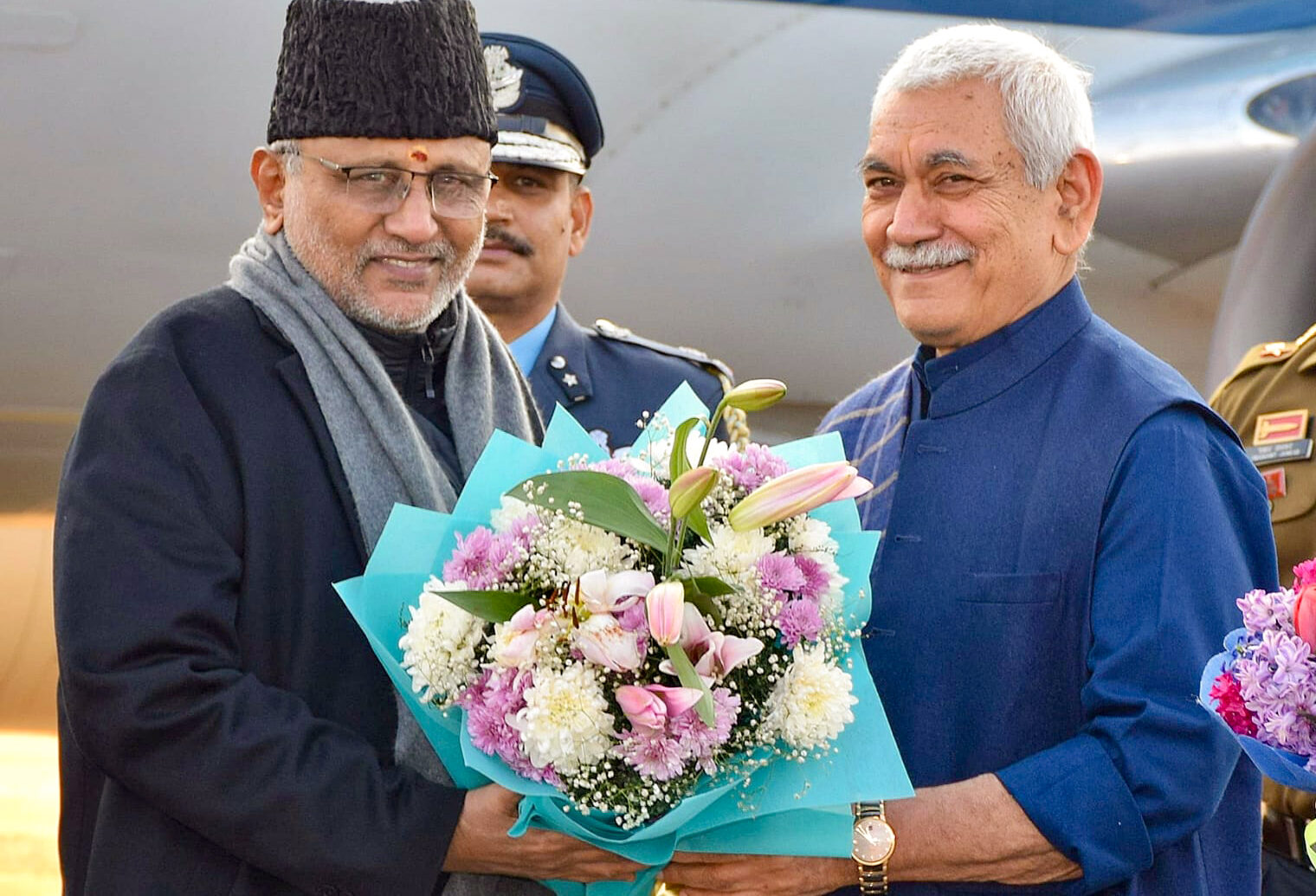
Shri Suman Bery, Vice-Chairman, NITI Aayog, released the latest edition of the “Trade Watch Quarterly” publication for Quarter 2 of FY 25-26 (July-September 2025) on the 13th February 2026, in New Delhi. It was released in the distinguished presence of the Member, NITI Aayog, Shri Arvind Virmani and other senior officials.
The publication provides a comprehensive assessment of global and domestic trade trends at a time when global trade growth has moderated but remains positive, with services continuing to outperform goods and developing regions emerging as key drivers. In addition, the thematic section of this quarter’s edition focuses on India’s electronics trade, examining global demand patterns, India’s export footprint across mobile phones, consumer electronics, industrial electronics, and components, and participation in global electronics value chains. It identifies key structural constraints, policy gaps, and priority interventions required to strengthen competitiveness, deepen value addition, and enhance export performance.
The analysis highlights that India’s trade performance in Q2 FY26 was driven by export-led momentum sustaining the overall trade expansion amid heightened global uncertainty. Services and merchandise exports recorded robust growth of ~8.5%, outpacing import growth in both merchandise and services. At a structural level, the edition underscores the deepening of trade among developing economies, which has expanded nearly four-fold since 2005 and now accounts for a rising share of global exports, with India’s trade trajectory increasingly aligned with this Global South rebalancing through regional value chains and new trade corridors. Further, this edition highlights the growing role of e-commerce as a key enabler of future export growth. India is now among the world’s top six e-commerce markets, with electronics accounting for nearly half of online retail, and while e-commerce exports remain modest, they are projected to scale rapidly and could contribute 20–30 per cent of India’s merchandise exports by 2030, supported by ongoing improvements in logistics efficiency, regulatory facilitation, and expanding MSME participation.
Electronics, the thematic focus of this quarter’s edition, has emerged as a cornerstone of India’s manufacturing and export transformation. Now the second-largest item in India’s export basket, the sector is both technology-led and deeply interconnected with industries such as automotive, renewable energy, telecom, defence, and digital services, making it a powerful multiplier for industrial growth.
India’s share in global electronics demand has expanded at a rapid CAGR of 17.2 per cent, significantly outpacing global growth of 4.4 per cent between 2015 and 2024, driven primarily by the sharp rise in mobile phone exports. Between 2016 and 2024, electronics exports increased nearly fivefold, reaching USD 42.1 billion. With global electronics trade valued at USD 4.6 trillion, the sector represents one of the largest and fastest-evolving segments of the world economy. India has demonstrated particular strength in products such as mobile phones, consumer electronics, and communication equipment, with exports increasingly directed towards major final-consumption markets including the United States, the United Kingdom, and the UAE.
Having established a strong foothold in assembly and system integration, India is now entering the next phase of its electronics journey, moving decisively toward component manufacturing and higher value addition. This transition is supported by targeted policy measures, including the Union Budget’s ₹40,000 crore allocation under the Electronics Components Manufacturing Scheme, aimed at strengthening domestic capabilities.
The analysis underscores that sustained competitiveness will be driven by deeper integration into global electronics value chains, encompassing printed circuit board design, semiconductor assembly and testing, power electronics, and embedded systems. Complemented by continued improvements in logistics efficiency, tariff rationalisation, and industry-aligned skill development, these shifts position electronics as a key engine of India’s export growth and technological advancement in the coming decade.
Addressing the occasion, Shri Suman Bery, said “Electronics, as the organising core of modern manufacturing value chains, with semiconductors and components, plays a key role in determining trade balances and technological sovereignty. While India has achieved scale in final assembly, sustained competitiveness will depend on correcting structural cost disabilities, deepening domestic component ecosystems, and leveraging anchor investments in components to embed Indian firms more firmly within global production networks”.
Member, Dr. Arvind Virmani also commended the team for delivering a timely and analytically robust edition of the publication. He noted that deeper integration into global value chains, especially in electronics, will be central to sustaining India’s export momentum, enhancing productivity, and generating quality employment over the medium term.
The edition provides an important resource for policymakers, industry, researchers, and academia with its data-driven analysis and forward-looking policy insights to support informed decision-making and strengthen India’s trade competitiveness in a dynamic global landscape.
The full publication can be accessed at: https://niti.gov.in/sites/default/files/2026-02/Trade-Watch-Quarterly-July-September-Q2-FY-2025-26.pdf