People walk at the entrance of the venue of the United Nations climate change conference COP29, in Baku, Azerbaijan November 18, 2024. REUTERS
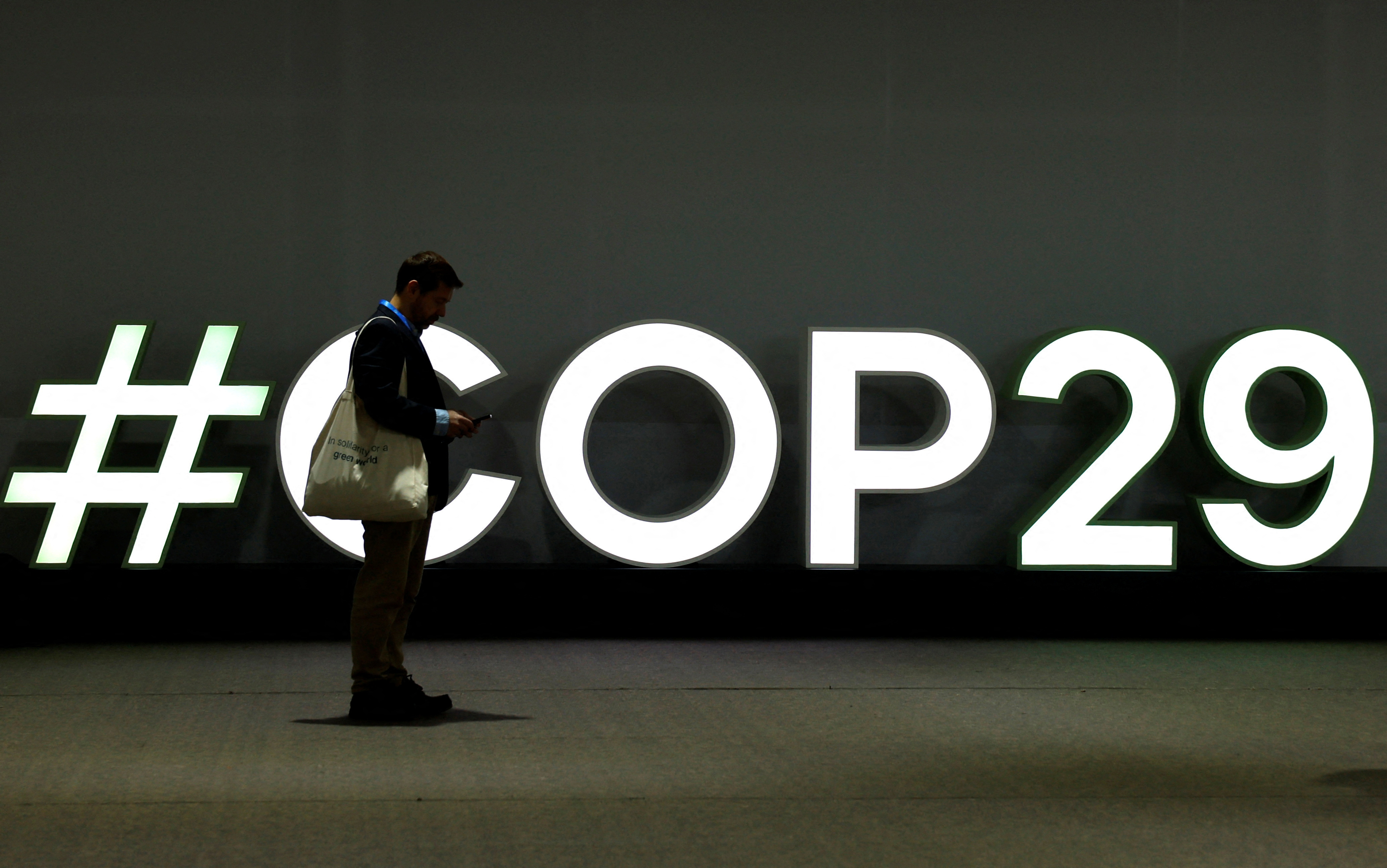
A man stands next to the logo of the COP29 United Nations climate change conference, in Baku, Azerbaijan November 20, 2024. REUTERS
BAKU, Nov 21 (Reuters) – The United Nations climate body published on Thursday fresh options for the COP29 summit’s primary goal of agreeing how much money richer countries should provide poorer ones to help them tackle climate change.
Getting a deal on the money has proved slow-going at the talks in Azerbaijan’s capital of Baku, and the latest draft of the negotiating text arrived several hours later than scheduled as delegates entered, in theory, the closing 48 hours.
While the summit is set to wrap up on Friday, the new document showed much remains to be decided on key questions, such as what counts towards the annual figure, who pays, and how much.
“We are far from the finish line,” said Li Shuo, an Asia Society Policy Institute climate diplomacy expert. “The new finance text presents two extreme ends of the aisle without much in between.”
Economists told the U.N. talks last week that developing countries need at least $1 trillion annually by the end of the decade to cope with climate change.
Although the 10-page document was reduced to less than half the size of the previous version by stripping out some options, it summarized the opposing positions of blocs of developed and developing nations established before the event.
One focused on ensuring the funds were grants or grant-equivalent in form, and that contributions from developing countries to each other – a nod to large potential donors such as China – were not formally part of the target.
The other, repeating the position of richer countries, aimed to broaden the types of finance that count toward the final annual goal, not just grants from developed countries, and included contributions from others.
Both options avoided specifying the total amount of money that countries would aim to invest each year, leaving the space marked with an ‘X’.
“Crucially, the text misses a number that defines the scale of future climate finance, a prerequisite for negotiation in good faith,” Li added.
That was perhaps not surprising as key donor countries, including those in the European Union, have said they want more clarity on the structure and contributor base before publicly discussing how much they could chip in.
Editing by Clarence Fernandez